Roof Replacement Cost: What a New Roof Costs and What Moves the Number
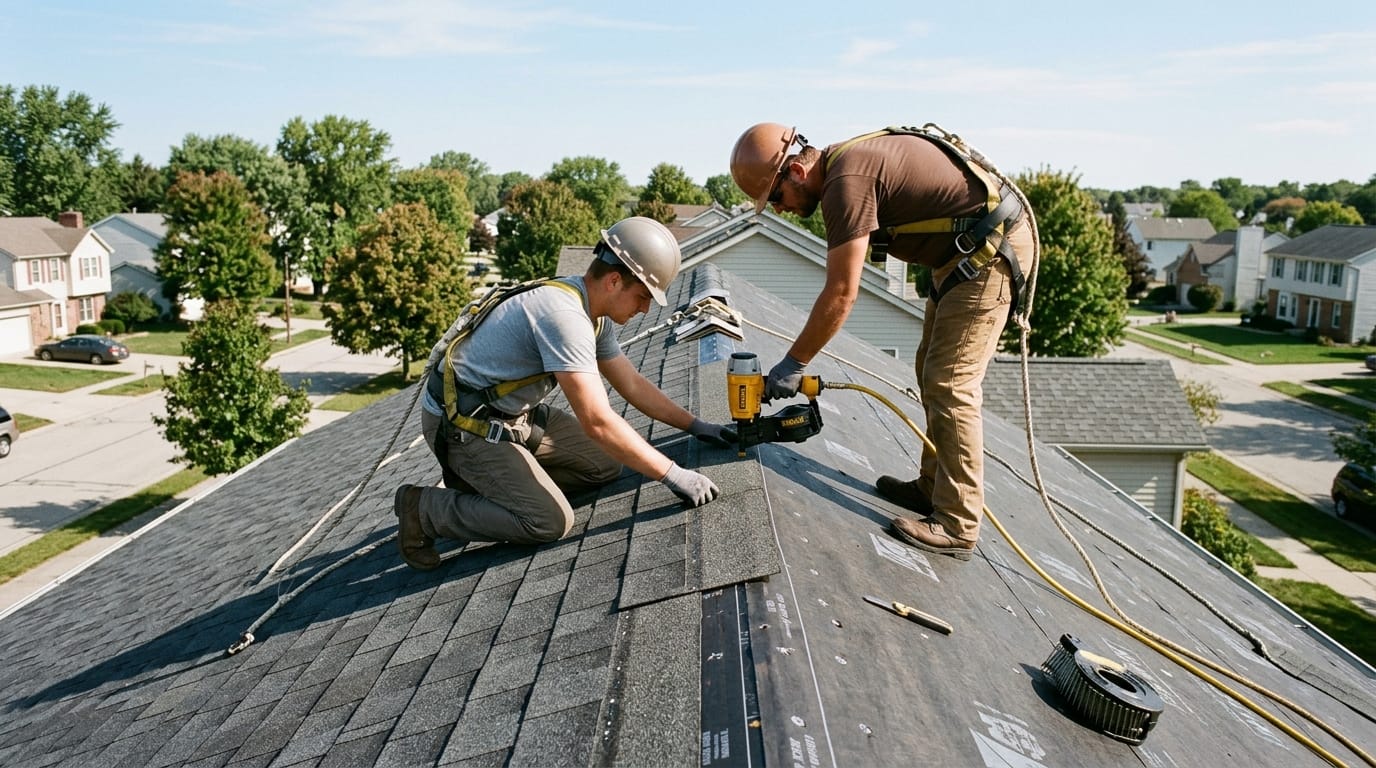
Most homeowners spend $9,000 to $18,000 replacing an asphalt shingle roof, inside a wider range of roughly $7,500 to $30,000. Your position in that range comes down to five things: roof size, pitch, material, how many old layers come off, and where you live.
What Does a Roof Replacement Actually Cost?
The honest answer is a range, because a single number would be wrong for almost everyone.
Published 2026 figures put full replacement between $7,500 and $30,000, with most homeowners landing between $9,000 and $18,000 for asphalt shingle. The national average sits near $10,000–$10,500 (This Old House, retrieved 2026-07-29).
That spread is not vagueness. A 1,200 sq ft single-story ranch with one layer of shingles to remove and a 4:12 pitch is a genuinely different job from a 3,000 sq ft two-story with three layers, a 10:12 pitch, and four skylights. Same material, very different invoice.
Before comparing any quote, learn one unit. A roofing square is 100 square feet of roof surface. Contractors price and discuss work in squares, not square feet. A 2,000 sq ft roof is 20 squares.
If you want the arithmetic below done for your own house, our roof cost calculator takes six inputs and returns the same breakdown — materials, labor, tear-off, permits — with no email or phone number required.
What Does It Cost Per Square Foot?
Material choice sets the floor. Labor and complexity set everything above it.
The same figures in text:
| Material | Cost per sq ft installed |
|---|---|
| 3-tab asphalt shingle | $3.43 – $4.65 |
| Architectural asphalt shingle | $4.11 – $5.57 |
| Mid-range project, all-in | $5.09 – $6.66 |
Architectural shingles cost roughly a dollar more per square foot than 3-tab. On a 2,000 sq ft roof that is about $2,000. They also generally carry longer warranties and better wind ratings, which is why most replacements now specify them.
What Do the Other Materials Cost?
Asphalt covers most replacements, but it is not your only option, and the spread between the cheapest and most expensive material is roughly eight to one.
These are the figures behind our own roof cost calculator, quoted here so the tool and the article cannot contradict each other. Cost data updated July 2026. A square is 100 sq ft.
| Material | Per square | Per sq ft | Typical service life |
|---|---|---|---|
| 3-tab asphalt shingle | $350 – $450 | $3.50 – $4.50 | ~20 years |
| Architectural asphalt shingle | $400 – $600 | $4.00 – $6.00 | ~30 years |
| Metal shingle | $600 – $1,400 | $6.00 – $14.00 | ~45 years |
| Standing seam metal | $1,000 – $1,800 | $10.00 – $18.00 | ~50 years |
| Clay tile | $1,100 – $2,500 | $11.00 – $25.00 | ~60 years |
| Natural slate | $1,500 – $3,000 | $15.00 – $30.00 | ~75 years |
On a 2,000 sq ft roof — 20 squares — that is roughly $7,000–$9,000 in 3-tab against $30,000–$60,000 in slate.
For more depth than a table row gives you, we cover metal roof cost and tile roof replacement as their own guides, and how long a roof actually lasts by material across all six of these.
Three caveats the table cannot carry:
- Tile and slate are heavy. Many homes need structural reinforcement before either can go on, and that engineering is not in the numbers above. Have someone confirm your framing can carry the load before you price the roof.
- Metal shingle has the widest internal spread of any line here, because "metal" covers everything from steel to copper. Steel sits near the bottom, copper near the top.
- Published sources disagree on metal, and noticeably. This Old House puts metal roofing at $14–$20 per sq ft for zinc rising to $29–$41 for copper (This Old House, retrieved 2026-08-02) — well above our standing-seam range. Metal is also the one material with live policy exposure: federal tariffs on imported steel, aluminum and copper were adjusted again in June 2026 (Federal Register, retrieved 2026-08-02). If you are pricing metal, get current quotes rather than budgeting off last year's figure.
Which Material Is Cheapest Over Its Life?
Not the one with the lowest sticker price. Divide each material's cost by the years it is expected to last and the ranking changes.
The same arithmetic in text, showing both ends of each range:
| Material | Cost per square per year |
|---|---|
| Architectural asphalt shingle | $13.30 – $20.00 |
| Metal shingle | $13.30 – $31.10 |
| 3-tab asphalt shingle | $17.50 – $22.50 |
| Clay tile | $18.30 – $41.70 |
| Standing seam metal | $20.00 – $36.00 |
| Natural slate | $20.00 – $40.00 |
The result most people do not expect: 3-tab is the cheapest roof to buy and it is not the cheapest roof to own. Architectural beats it on both ends of the range, because roughly 15% more money buys roughly 50% more service life.
For example, take a 20-square roof. 3-tab at $400 per square is $8,000 and should last about 20 years — $400 a year. Architectural at $500 per square is $10,000 over about 30 years — $333 a year. The architectural roof costs $2,000 more up front and about $67 a year less to own.
Three honest limits on that arithmetic. It assumes you keep the house long enough to reach the second replacement, it ignores the time value of money, and it assumes each roof actually reaches its rated life — ventilation and installation quality decide that more than the shingle does.
Where Does the Money Actually Go?
Labor, mostly. That surprises people who assume they are paying for shingles.
Roofing labor runs $150 to $300 per square in 2026. On a 2,000 sq ft roof — 20 squares — that is $3,000 to $6,000 in labor alone, or roughly 40 to 60 percent of the total (SquareDash, retrieved 2026-07-29).
Because labor dominates, anything that slows a crew down raises your price. Steep pitch requires fall protection and slows every trip across the roof — OSHA requires protection for work six feet or more above a lower level (OSHA, retrieved 2026-07-29). Complex rooflines with valleys, dormers, and skylights mean more cutting and more flashing detail. Both show up as labor hours, not as a separate line. Skylights carry their own separate cost story too, worth knowing on its own — our skylight guide covers what repair versus full replacement actually runs.
What Should You Budget for Your Roof Size?
Find your square footage, then read across. These are asphalt shingle figures at typical complexity.
| Roof size | Squares | Typical range |
|---|---|---|
| 1,000 sq ft | 10 | $4,000 – $8,000 |
| 1,500 sq ft | 15 | $6,000 – $12,000 |
| 2,000 sq ft | 20 | $8,000 – $16,000 |
| 2,500 sq ft | 25 | $10,000 – $20,000 |
| 3,000 sq ft | 30 | $12,000 – $24,000 |
Two cautions on this table. Your roof area is larger than your floor area — a steeper pitch means more surface over the same footprint, sometimes 20 to 40 percent more. And these ranges assume one layer of tear-off and no deck repair. Both assumptions can break.
What Moves Your Number Up or Down?
Six factors, roughly in order of impact.
- Roof size. The largest single driver. Everything scales from it.
- Pitch. Steeper roofs need fall protection and take longer. Expect a premium above roughly 8:12.
- Material. 3-tab is cheapest. Architectural is the common default. Metal, tile, and slate run considerably higher.
- Layers to remove. Each existing layer adds labor and disposal weight. Many jurisdictions cap total layers, forcing a full tear-off.
- Deck condition. Rotted decking is usually invisible until tear-off. Get a unit price for replacement in writing before work starts.
- Region and access. Local labor rates vary widely, and two-story or tight-access properties cost more than a single-story with driveway parking.
The same factors in text:
| Factor | Toward the low end | Toward the high end |
|---|---|---|
| Pitch | Under 6:12, walkable | Above 8:12, harnesses |
| Material | 3-tab shingle | Metal, tile, slate |
| Tear-off | One layer | Two or three layers |
| Roofline | Simple gable | Valleys, dormers, skylights |
| Access | Single story, driveway | Two story, tight lot |
One factor people underweight: ventilation. Poor attic airflow shortens shingle life, so a replacement is the moment to fix it. Winter airflow through a cold attic reduces ice damming, and summer airflow moves out superheated air that degrades shingles (ENERGY STAR, retrieved 2026-07-29). Adding ridge and soffit venting during a tear-off is far cheaper than retrofitting later.
Does Where You Live Change the Price?
Yes, and mostly through labor rather than materials. Shingles cost roughly the same everywhere; the crew installing them does not.
Our cost engine carries a labor multiplier per state against a national baseline of 1.0, plus a typical permit fee. A sample below — or see the full roof replacement cost by state and metro breakdown for your own area:
| State | Labor multiplier | Typical permit |
|---|---|---|
| Texas | 0.82 | ~$175 |
| North Carolina | 0.80 | ~$160 |
| Florida | 0.85 | ~$300 |
| Georgia | 0.88 | ~$150 |
Two things worth reading off that table. Labor in the lower-cost states runs roughly 15–20% under the national baseline, which on a job where labor is 40–60% of the total moves the whole number by several thousand dollars. And permit fees do not track labor — Florida's permit is double Georgia's while its labor multiplier is lower, because permitting reflects local code enforcement and wind requirements rather than wage levels.
For example, the same 20-square architectural job at $10,000 national-average pricing lands near $9,400 in Texas and near $9,700 in Georgia, before permits. Not a reason to move house, but enough that a national average quoted at you as your price deserves a question.
Coastal and high-wind areas add a second layer: stricter fastening schedules and wind ratings mean more labor hours and sometimes a different product entirely. That shows up in the quote as scope, not as a line called "hurricane."
How Do You Sanity-Check a Quote?
Compare against three things: the ranges above, other bids on the same written scope, and what the quote itemizes.
A quote worth trusting names the shingle product and line, states the number of squares, lists tear-off layers, prices deck repair per sheet, and specifies the warranty term. A quote that says "replace roof — $14,500" gives you nothing to evaluate.
Get three bids on identical scope. If one comes in dramatically low, look for thinner shingles, fewer layers of tear-off, or excluded flashing before assuming you found a bargain. Our guide to getting roofing quotes covers how to request them so they're actually comparable, and what to do once you have all three in hand.
Also check the inspection cadence you will be signing up for. The National Roofing Contractors Association recommends inspecting at least twice a year plus after major storms (NRCA, retrieved 2026-07-29). Some manufacturer warranties require documented inspections to stay valid.
Cost data updated July 2026. Figures are published US ranges and vary by region, roof complexity, and access.
What do you want to do next?
Three ways we can help from here.
Get the free contractor checklist → 7 questions to ask any roofer before you call. Know what to ask, and what a good answer sounds like.Frequently Asked Questions
How much does a new roof cost on a 2,000 square foot house?
Generally $8,000 to $16,000 for asphalt shingle at typical complexity. Note that your roof surface is larger than your floor area, so a 2,000 sq ft house often has a roof somewhat above 2,000 sq ft.
Is a roof replacement cheaper in the off-season?
Sometimes. Late fall and winter are slower in many markets, and some contractors discount to keep crews working. Weather limits installation windows though, so the savings are not guaranteed.
Can I put new shingles over the old ones?
Sometimes, and it is cheaper. It also prevents any inspection of the decking underneath, and many jurisdictions cap the number of permitted layers. Overlaying trades a lower price today for unknown risk later.
Does homeowners insurance pay for a roof replacement?
Only for covered sudden damage, such as a storm event. Gradual wear and age-related failure are not covered. Deferred maintenance can also weaken an otherwise valid claim.
How long should a new asphalt roof last?
Architectural shingles commonly carry warranties in the 25 to 30 year range, though real service life depends heavily on ventilation, installation quality, and climate. A poorly ventilated roof ages faster than the warranty suggests.