Best Roofing Shingles: 3-Tab vs. Architectural vs. Premium
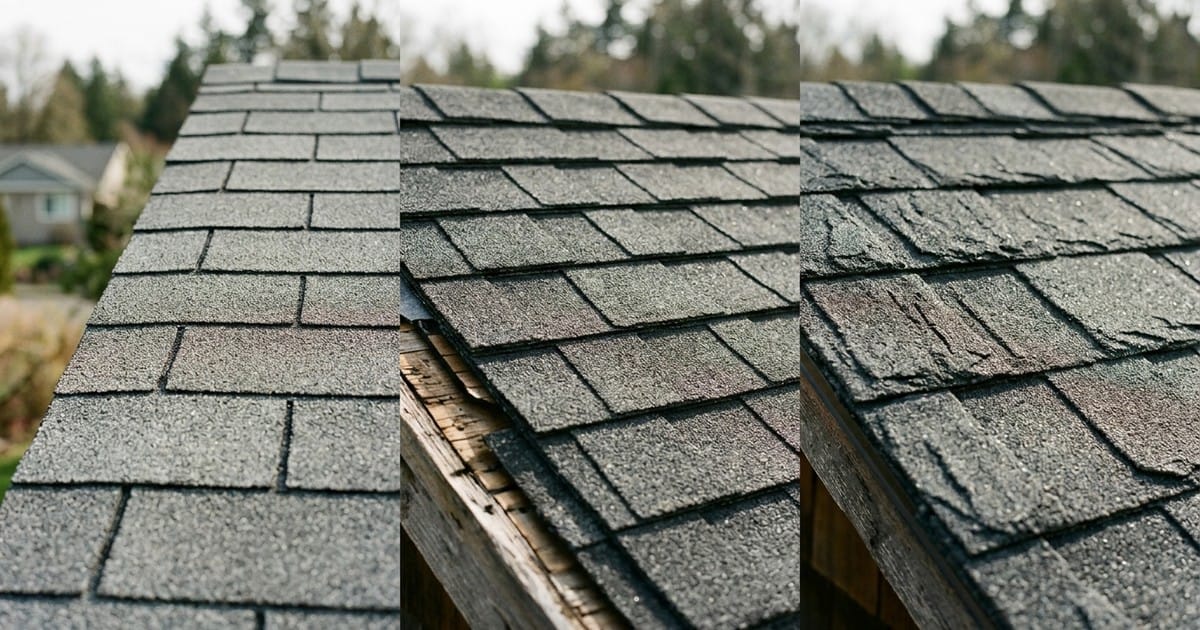
Consumer Reports ran actual strength tests on asphalt shingles and reached a conclusion the marketing around "premium" shingles doesn't lead with: "for most homes, a top-performing three-tab, which has only one layer, or architectural laminated shingles will work just fine" (Consumer Reports, retrieved 2026-08-06). The most expensive tier isn't automatically the one your specific house needs — but the tiers do differ in real, testable ways worth knowing before you pick one.
The Three Tiers, and What Actually Changes Between Them
Three tiers, and the difference isn't just appearance.
3-tab shingles are a single layer, flat profile, and the least expensive option — our main cost guide prices them alongside every other material. Architectural (dimensional/laminated) shingles use two or more overlapping layers, which is where the extra thickness, the dimensional look, and most of the wind-rating improvement come from. Premium/designer shingles push that further — thicker still, styled to mimic slate or shake, with the strongest warranties.
Wind resistance is graded by a real testing standard, not a marketing claim: ASTM D3161 and D7158 classify shingles by the wind speed they're tested to withstand, up to a "Class F" or "Class H" rating that's rated for essentially any wind speed a residential code would require (building code text via up.codes, retrieved 2026-08-06). The gap between tiers is real and sometimes large — one manufacturer's standard 3-tab line is rated to 60 mph, while its premium architectural line in the same catalog is rated to 130 mph.
| Tier | Construction | Typical warranty | Wind rating (example) |
|---|---|---|---|
| 3-tab | Single layer, flat profile | 20-25 years | As low as a 60 mph-rated line |
| Architectural | 2+ overlapping layers | 30 years to lifetime | Up to Class H (essentially any speed) |
| Premium/designer | Thickest, styled profile | Lifetime, strongest terms | Class H, same ceiling as architectural |
Notice premium doesn't necessarily out-rate architectural on wind — both can reach the top testing class. What premium mainly buys past that point is warranty strength and looks, not a wind-resistance ceiling architectural can't also reach.
One nuance the class rating alone doesn't cover: the ASTM class describes the product's design, not how it was installed, and both code and manufacturer warranties condition wind performance on correct nailing. The IRC requires a minimum of 4 roofing nails per shingle for standard installations, rising to 6 nails where the design wind speed exceeds 110 mph or the manufacturer specifically calls for it (IRC 2018 §R905.2.6, retrieved 2026-08-10) — and manufacturers layer their own placement requirements on top, since nail zone location on laminated shingles differs from standard 3-tab. A Class H shingle installed with the wrong nail count or placement can have its wind coverage voided even though the product itself tested at 150 mph. Ask your contractor to confirm the nailing pattern matches the manufacturer's installation instructions for the specific product — it's a detail that doesn't show up on a spec sheet but decides whether a wind warranty actually pays out.
Does a Higher Tier Mean a Better Fire Rating?
No — and this is one place where tier genuinely doesn't matter.
Shingle fire performance is tested under UL 790 (equivalent to ASTM E108), which burns a sample against three severities: Class A tests a 2,000-gram burning brand and requires a self-ignition temperature above 650°F with flame spread capped at 6 feet; Class B steps down to a 500-gram brand and 575°F; Class C uses a 9-gram brand and 450°F (UL Solutions, retrieved 2026-08-10). Class A is the highest rating available, and virtually every asphalt shingle sold today — 3-tab, architectural, or premium, across every major manufacturer — carries it. Unlike wind rating, fire class isn't a lever "premium" pulls that "3-tab" doesn't; it's already standard at every tier.
What's Actually Inside the Shingle?
The mat underneath the asphalt coating, mostly, and it's the one construction detail behind most of the tier-independent differences above.
Nearly all modern asphalt shingles use a fiberglass mat — a layer of glass fibers bonded with resin, then saturated with asphalt and mineral fillers. That's a shift from older organic-mat shingles, built on a paper or wood-fiber base soaked in asphalt, which are now largely phased out of new production. Fiberglass mats resist heat and humidity better and don't absorb moisture the way a cellulose-based mat does, which means less deformation as the shingle ages (InterNACHI, retrieved 2026-08-10). Organic-mat shingles historically carried more total asphalt content and had their own durability advocates, but the moisture-related warping is the trade-off that pushed the industry toward fiberglass almost universally — and it holds regardless of which tier you're buying, since fiberglass is now the base material across 3-tab, architectural, and premium lines alike.
Does the Expensive One Actually Perform Better?
Sometimes not by nearly as much as the price gap suggests.
Consumer Reports found that within similarly-performing categories, the price spread can be dramatic for a comparable result — citing one shingle at $180 per square against a similar-performing alternative at $325, an 81% price difference for performance their own testing rated as comparable. Their broader finding: "the most costly type — multilayered architectural shingles... generally performs better overall than other styles" in strength testing, but that doesn't mean every premium-tier product beats every architectural one, or that the priciest option in a catalog is worth it for a typical home. Ask for the specific product's independent test class, not the tier name, before assuming "premium" means "best-performing."
If You're in a Humid or Shaded Climate, This Matters More Than the Tier
Algae resistance is sold as an upgrade across every tier, and it's worth asking about regardless of which one you pick.
Black algae streaking shows up faster in humid climates and on shaded, north-facing slopes — our roof moss removal guide covers what actually causes it and how to deal with it once it's there. Algae-resistant granules (usually copper-infused) are available as an option on 3-tab shingles just as much as premium ones; it's a separate spec from the tier itself, not something you automatically get by paying more.
What Does "Lifetime Warranty" Actually Pay Out?
Less than the term suggests, usually, and it depends entirely on one word most homeowners skip past: prorated.
A non-prorated warranty means the manufacturer covers close to 100% of material cost for a defect claim for the full stated period — often the first 10 years outright, sometimes longer on premium lines. A prorated warranty starts the same way but scales down: full coverage for the first several years, then a declining percentage after that, commonly dropping to roughly 50% by year 15 and as little as 10% near the end of the stated term (County Roofing Systems, retrieved 2026-08-10). "Lifetime" describes how long the warranty exists, not what it pays if something goes wrong late in that period.
| Warranty type | What it pays | When coverage typically starts declining |
|---|---|---|
| Non-prorated | Close to 100% of material cost for the full stated period | Doesn't decline within that period |
| Prorated | Starts near 100%, then drops on a declining schedule | Often after year 5-10 |
Ask directly whether the warranty on your specific product is prorated, and if so, request the actual schedule — what percentage it pays at year 10, year 15, and year 20 — rather than accepting "lifetime" as a self-explanatory answer. The gap between a strong non-prorated warranty and a steeply prorated one marketed with the same word is real money if a defect shows up in year 18 rather than year 3.
Get the Class Rating in Writing, Not Just the Tier Name
The tier name alone doesn't guarantee a specific wind rating.
Ask for the specific product's ASTM D3161 or D7158 class in writing, not just "architectural" or "premium" as a label — the tier name alone doesn't guarantee a specific wind rating, and two products in the same tier from different lines can differ. Ask whether algae-resistant granules are included or an upgrade, especially if your lot has shade or you're in a humid climate — it's a small line item that's easy to skip by default. Ask whether the wind warranty depends on a specific nailing pattern, and confirm your contractor is following it — a correctly-rated shingle installed incorrectly can still lose its wind coverage. Ask for the actual proration schedule on a "lifetime" warranty rather than treating the word as a full-coverage guarantee.
If you're weighing shingle against a completely different material rather than between shingle tiers, our metal roof cost guide and metal vs. shingles decision guide cover that broader comparison.
Frequently Asked Questions
Is architectural shingle really worth the extra cost over 3-tab?
For most homes, yes on longevity and wind performance — but Consumer Reports' own testing found a well-made 3-tab can perform adequately for typical conditions too. The bigger factor is often your specific climate (wind exposure, algae risk) rather than a universal "always upgrade" rule.
Do premium shingles have a higher wind rating than architectural?
Not necessarily. Both can reach the top ASTM testing classes (D3161 Class F, D7158 Class H), which cover essentially any wind speed a residential code requires. Premium's main advantages are typically warranty strength and appearance, not a wind ceiling architectural can't also reach — always check the specific product's rating rather than assuming by tier.
What's the real cost difference between tiers?
That depends on material and region — our roof replacement cost guide and metal roof cost guide run the actual per-square figures across materials, since repeating them here risks going stale independently of the source data.
Do premium shingles have a better fire rating than 3-tab?
No. Virtually every asphalt shingle sold today, at every tier, carries the highest fire rating available (Class A under UL 790 / ASTM E108). Fire resistance is one of the few specs that's already standardized across the whole market rather than something you pay more to get.
Does a "lifetime" shingle warranty really cover the shingles for life?
It depends on whether the warranty is prorated. A non-prorated warranty pays close to full material cost for its stated period; a prorated one starts near full coverage and declines over time — sometimes to as little as 10% near the end of the term. "Lifetime" tells you how long the warranty runs, not what percentage it pays if a claim comes late in that period.
Cost data updated August 2026. Figures are published estimates and vary by product line, region, and installer.
What do you want to do next?
Three ways we can help from here.
Get the free contractor checklist → 7 questions to ask any roofer before you call. Know what to ask, and what a good answer sounds like.