Roof Moss Removal: What Actually Works (and What Damages the Roof)
The instinct to reach for a pressure washer is exactly the instinct that voids a shingle warranty. IKO, one of the larger shingle manufacturers, is specific about why: a pressure washer is "strong enough to break a shingle's adhesive and lift it up," and can "strip asphalt shingles of their granule surface, which can ruin their performance and destroy their color" (IKO, retrieved 2026-08-04). The fastest way to remove moss is also the way that shortens the roof's life.
Moss and Those Black Streaks Are Two Different Problems
They get lumped together, but they're not the same organism and they don't damage a roof the same way.
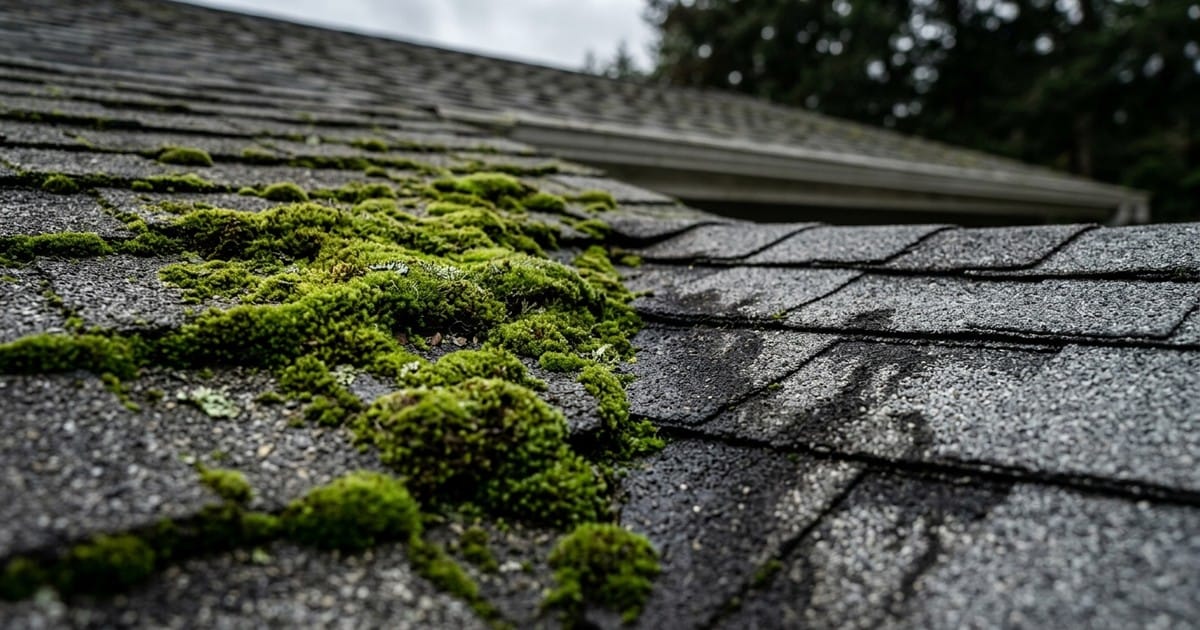
Moss is a small green plant that takes hold in shaded, debris-collecting spots — usually the north side of a roof, or anywhere leaves and needles sit long enough to hold moisture. It grows in a visible mat, and a thick enough mat can physically lift shingle edges, which is where the real structural concern comes from.
The black streaking most homeowners notice is something else: a cyanobacteria called Gloeocapsa magma, which feeds on the limestone filler used in most modern fiberglass-mat shingles (Atlas Roofing). It's mostly a cosmetic problem and shows up for the same reason moss does — shade and moisture — but it's a different organism with a different growth pattern, which is why a product or method aimed at one doesn't always touch the other.
| Moss | Black streaking (algae) | |
|---|---|---|
| What it is | A small green plant | Gloeocapsa magma, a cyanobacteria |
| Where / what it feeds on | Shaded, debris-holding spots | Limestone filler in shingles |
| Real risk | Can lift shingle edges | Mostly cosmetic |
How to Remove It Without Damaging the Roof
The manufacturer guidance is consistent: low pressure, the right chemistry, and patience instead of force.
IKO recommends an EPA-rated moss and algae cleaner, or a mild bleach-and-detergent solution, applied and left to sit for 15 to 20 minutes before rinsing. The rinse itself matters as much as the cleaner — a garden hose on low pressure, aimed so the spray never drives water up under the shingle tabs. Once the moss has loosened, it comes off by hand or with a soft brush; scrubbing hard defeats the purpose of using a gentle cleaner in the first place.
If a section of roof is heavily matted with moss, that's a job worth handing to a professional soft-wash service rather than a ladder and a Saturday — not because the chemistry is complicated, but because working on a pitched, wet roof is genuinely dangerous, and a professional crew has the harness setup and experience that a one-time DIY attempt doesn't.
| Pressure washer — avoid | Manufacturer-recommended method | |
|---|---|---|
| Risk 1 | Can break the shingle's adhesive seal | EPA-rated cleaner or mild bleach/detergent |
| Risk 2 | Strips the protective granule surface | 15-20 minute dwell time |
| Risk 3 | Can void the manufacturer's warranty | Rinse on low pressure only |
Do Zinc or Copper Strips Actually Work?
Yes, but not the way most people expect when they buy one.
A zinc, copper, or galvanized strip installed along the ridge releases metal ions with every rain, and those ions inhibit new moss and algae growth on the roof below it. IKO's own guidance includes an honest caveat worth taking seriously: "it is important to note that adding a copper strip will take time to start inhibiting moss. You shouldn't expect it to handle a current moss infestation by itself, only to prevent a new one." A strip is prevention, not treatment — the sequence that actually works is cleaning the existing growth first, then installing a strip to slow the regrowth.
| Situation | Reason | Recommendation |
|---|---|---|
| Moss already growing | A strip alone won't remove it | Clean the existing growth first |
| Roof is clean, want prevention | Ridge-installed metal strip | Install a zinc or copper strip |
What Should You Do Differently Next Time?
Two things matter more than which cleaner you buy.
Clear debris off the roof and out of the valleys before it has a chance to hold moisture — leaves and needles sitting in a shaded valley are exactly what starts a moss mat in the first place. If your roof is due for a replacement anyway and one side stays shaded and damp, ask about algae-resistant shingle granules or a zinc strip at install — it's a small addition at that stage rather than a retrofit later, available across shingle tiers, not just the premium ones. Our Georgia and Atlanta cost guides cover this same tradeoff for humid, tree-covered climates where the problem shows up fastest.
Frequently Asked Questions
Does moss actually damage a roof, or is it just cosmetic?
Moss is more than cosmetic. A thick enough mat holds moisture against the shingle surface and can lift shingle edges as it grows, which is a real entry point for water. The black algae streaking most people notice is closer to cosmetic on its own, though it shares the same shaded, damp conditions that let moss take hold.
Can I just use bleach on my roof?
A mild bleach-and-detergent solution, applied and rinsed at low pressure, is part of manufacturer-recommended cleaning. What causes damage is the method, not necessarily the chemical — high pressure and aggressive scrubbing are what strip granules and lift shingles, regardless of what cleaner you started with.
Will a zinc strip stop the moss I already have?
Not by itself. Zinc and copper strips prevent new growth over time as rain releases metal ions down the roof slope; they don't remove moss that's already established. Clean the existing growth first, then install a strip if you want to slow the regrowth.
What do you want to do next?
Three ways we can help from here.
Get the free contractor checklist → 7 questions to ask any roofer before you call. Know what to ask, and what a good answer sounds like.