Roof Replacement Cost in California: What You'll Actually Pay
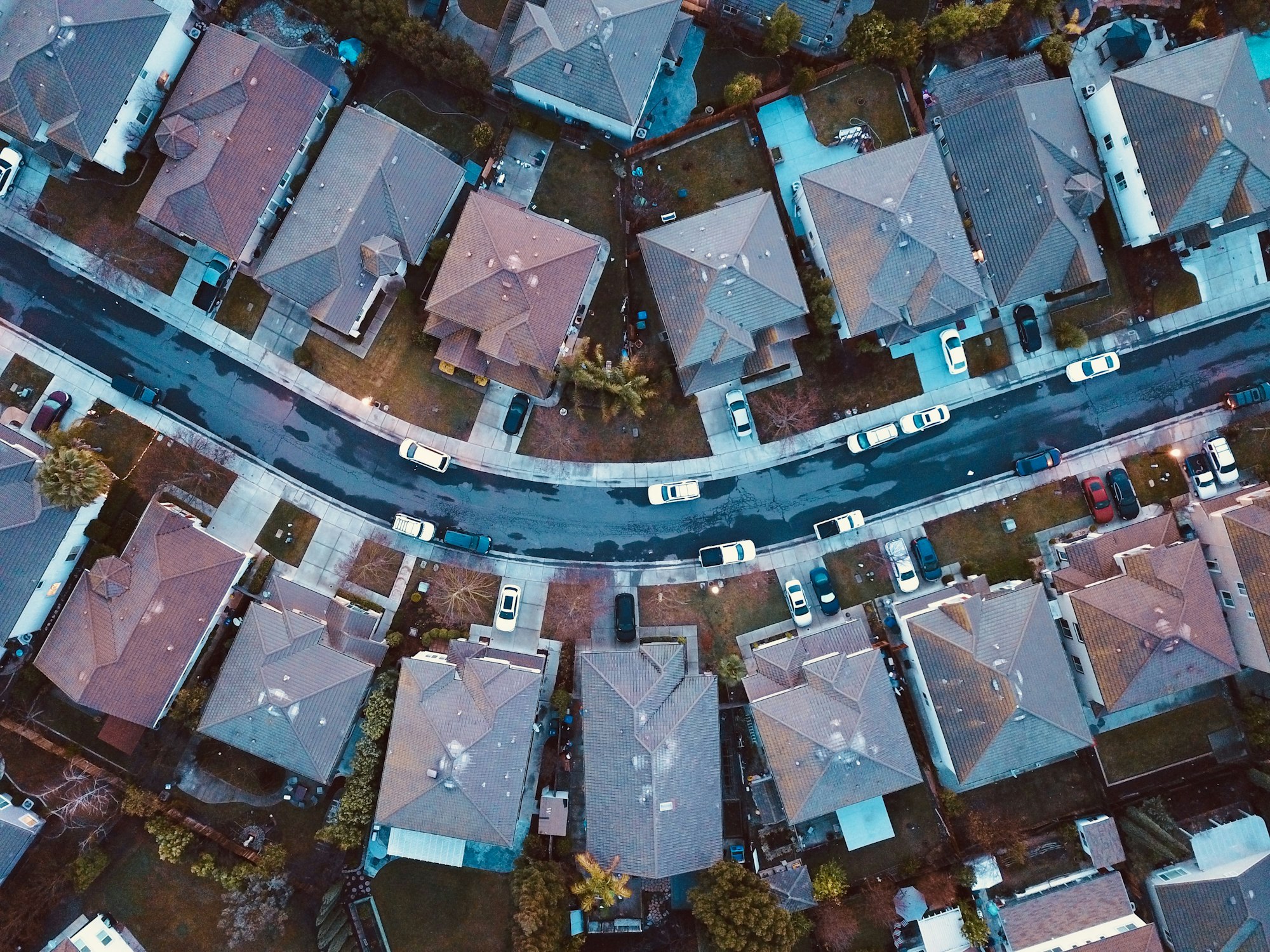
A roof replacement in California typically runs $15,700 to $21,700 for a 2,000 sq ft home with architectural shingles — the highest range of any state we currently cover, and it's worth saying plainly rather than softening it: California prices above the national baseline on both labor and permitting.
What Does a Roof Replacement Cost in California?
Between $15,700 and $21,700 for a typical single-story home, before any structural surprises.
That figure comes from real numbers, not a national average with "California" dropped into the headline. Our cost model prices California labor at 1.15× the national baseline — above average, not below it, unlike every other state we currently cover — against a $350 permit fee, also the highest baseline in our dataset. For a 2,000 sq ft home, moderate roof pitch, architectural shingle, and one layer of old roofing to remove, that works out to $15,700 on the low end and $21,700 on the high end.
Your own number moves with the same four variables everywhere: size, pitch, material, and how many layers of old roofing come off. In California specifically, material choice carries extra weight for a reason beyond price — see below.
First time here? for a 2,400 sq ft home.
We can't load current pricing data right now — and we'd rather show you nothing than guess at a number this big. Please refresh in a moment.
What's Different About Roofing in California?
If your home sits in a designated fire hazard zone, your roofing material isn't just a cost decision — it's a code requirement.
California's wildfire building standards, previously in Building Code Chapter 7A and now relocated to the California Wildland-Urban Interface Code (Part 7, Title 24, effective under the 2025 code cycle), apply to buildings in a mapped Wildland-Urban Interface (WUI) Fire Area or Fire Hazard Severity Zone. The code's own scope language is explicit that it applies to structures in those designated zones, not statewide (up.codes, hosting the California Building Code text, retrieved 2026-08-03). New construction and re-roofing in a qualifying zone must use a Class A fire-rated roof covering — tested as a full assembly, not just the shingle or tile itself.
This does not apply to every California home. A house in a dense urban neighborhood far from wildland vegetation is a very different case from one backing onto open hillside. Check your own property's Fire Hazard Severity Zone designation with your city or county planning department before assuming either way — don't take a contractor's word for it, and don't assume you're exempt just because your last roof wasn't Class A.
Asphalt shingle, metal, and concrete or clay tile can all be manufactured to meet Class A as a complete assembly; it's the installed system that carries the rating, not the raw material alone. If you're in a qualifying zone, our metal roof cost and tile roof replacement guides both cover materials commonly used to meet it.
Does Title 24 Require a "Cool Roof" on Your Reroof?
Depends entirely on which part of California your house sits in — this is a real, separate code requirement from the wildfire rules above, and it's easy to confuse the two.
California's energy code, Title 24, requires steep-slope residential roofs in climate zones 10 through 15 — broadly the state's hotter inland and desert regions — to meet a minimum aged solar reflectance of 0.20 and thermal emittance of 0.75 (or an equivalent Solar Reflectance Index of 16) on any reroofing project, whether it's a full tear-off or a layer installed over the existing roof (RoofVista, Title 24 cool roof reference, retrieved 2026-08-29). Coastal and Northern California climate zones 1 through 9 are exempt from this steep-slope requirement entirely — which means the same reroof job can be legally required to meet a reflectance standard in Sacramento and legally exempt from it in San Francisco.
One nuance worth knowing before you shop shingle colors: these are aged values, measured after three years of real weathering under Cool Roof Rating Council protocols — not the reflectance a shingle tests at fresh off the pallet. A product that reads well when new can still fail to meet Title 24 once dirt and UV exposure have done their work, so ask specifically for the aged rating on any product a contractor claims is compliant, not the initial number on the box.
Does California Require a Roofing Contractor License?
Yes, unambiguously — this is one of the more strictly enforced licensing regimes of any state on this site.
Any roofing work — materials and labor combined — valued above $500 requires a C-39 specialty contractor license issued by the Contractors State License Board. Getting one isn't a formality: an applicant needs four years of verified journey-level roofing experience within the past decade, has to pass both a trade exam and a law-and-business exam, and must post a $25,000 contractor's bond before the license is issued (Jobber, C-39 licensing reference, retrieved 2026-08-29). That $500 threshold is low enough that it covers nearly every roofing job that isn't a truly minor patch — a full replacement clears it many times over.
CSLB maintains a free, public license lookup by contractor name or license number, and it's worth checking directly rather than trusting a license number printed on a truck door — the lookup shows whether the license is active, its bond status, and any disciplinary history on file.
What Should You Do Before Signing?
Get the same three things you'd want anywhere: a written scope, a real material spec, and the permit named as its own line.
Confirm your Fire Hazard Severity Zone designation yourself before the quote arrives, rather than relying on the contractor to raise it. If you're in a qualifying zone, get the Class A assembly rating in writing, including underlayment — the covering alone isn't the tested assembly. Ask whether the permit already accounts for a WUI/Chapter 7A inspection, since that's a real step in qualifying areas that a generic national quote won't anticipate. Ask for the aged solar reflectance number, not the initial rating, if your climate zone requires a cool roof — a shingle that looks compliant fresh out of the box can fail the standard once it's weathered. Verify the C-39 license directly through CSLB's lookup rather than a number printed on an invoice, and confirm it's active with no open disciplinary actions.
Our full roof replacement cost guide covers what a complete estimate should include and how to compare bids fairly, across any state.
Frequently Asked Questions
Does every home in California need a Class A fire-rated roof?
No. The requirement applies specifically to new construction and re-roofing in a mapped Wildland-Urban Interface Fire Area or Fire Hazard Severity Zone, not statewide. Check your property's zone designation with your local planning or building department.
Why is California's range so much higher than other states?
Our model prices California labor above the national baseline — the only state we cover that runs a premium rather than a discount — and permit fees here are also the highest baseline in our dataset. Both are real regional cost drivers, not padding.
Is asphalt shingle allowed in a fire hazard zone?
It can be, if manufactured and installed as part of a tested Class A assembly. The rating applies to the full roofing system, not the shingle material by itself, so confirm the specific assembly your contractor is quoting carries the rating.
Does my California reroof need to meet a cool-roof requirement?
Depends on location. Title 24 requires a minimum aged solar reflectance of 0.20 and thermal emittance of 0.75 for steep-slope roofs in climate zones 10-15 (the hotter inland and desert regions). Coastal and Northern California zones 1-9 are exempt from this specific requirement.
What license does a California roofer need?
A C-39 specialty contractor license from the CSLB, required for any roofing job over $500 in combined labor and materials. It requires four years of verified experience, passed exams, and a $25,000 bond. Verify any contractor's license status through CSLB's free public lookup.
Cost data updated August 2026. Figures are published estimates and vary by roof size, pitch, material, and local permit fees.
What do you want to do next?
Three ways we can help from here.
Get the free contractor checklist → 7 questions to ask any roofer before you call. Know what to ask, and what a good answer sounds like.