Ice Dam Prevention: What Actually Works, In Order
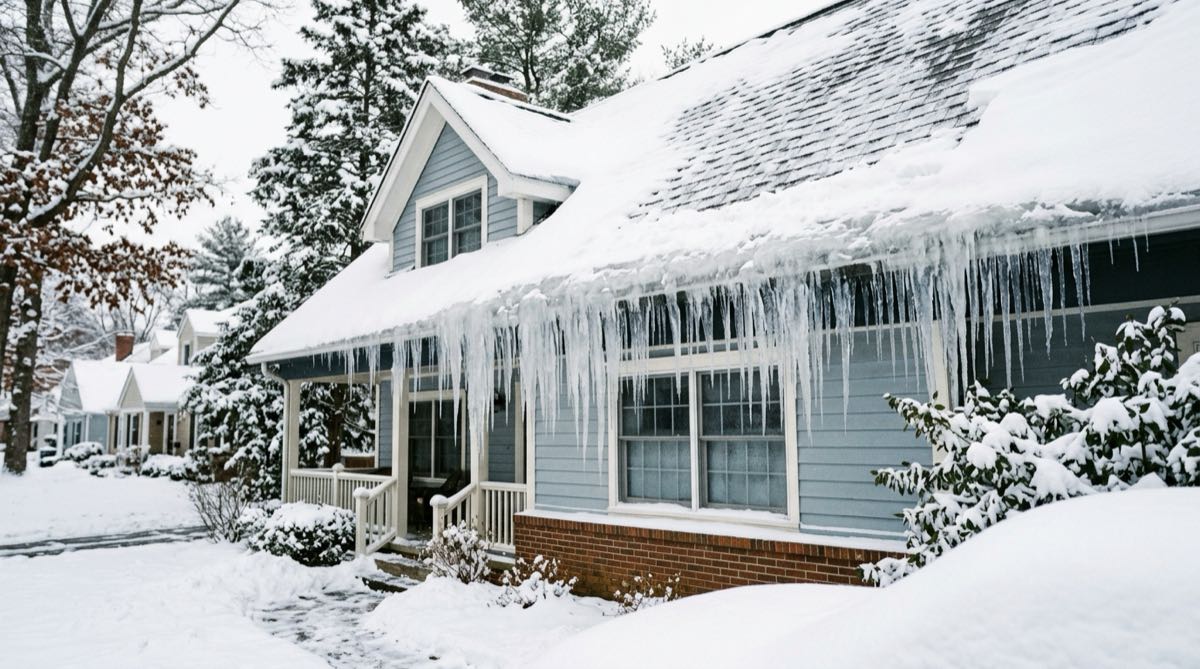
Most homeowners in a cold climate already know the basic mechanism behind an ice dam: warm air escapes into the attic, melts snow unevenly on the roof above, and that meltwater refreezes at the colder eaves. Knowing that doesn't tell you what to actually fix first, though — and the honest answer surprises people, because it isn't the ventilation upgrade most guides lead with.
The Real Priority Order: Air Sealing First, Not Ventilation
Because ventilation only manages the symptom — air sealing stops the actual heat from getting into the attic in the first place.
Ice dams need three things at once: snow on the roof, freezing temperatures, and warm air reaching the underside of the roof deck. Most homeowners hear "ventilation" as the fix, but building-science guidance from the Department of Energy's own research center puts air sealing first for a specific reason: it's "the most important step" because it addresses the root mechanism — heated interior air escaping into the attic — rather than managing the consequence after the fact (Building America Solution Center, U.S. Department of Energy, retrieved 2026-09-03). Insulation is second, keeping heat from transferring to the deck even where a small amount of air leakage remains. Ventilation is third — a genuinely useful supporting measure, and our ventilation guide covers the intake/exhaust mechanics behind it in depth, but it's not the first lever to pull if the attic is still full of unsealed bypasses.
What Does Air Sealing Actually Mean?
Closing the specific gaps warm air uses to escape into the attic, not a vague "seal your attic" instruction.
- Recessed lighting fixtures — a common, often-overlooked bypass straight from a heated room into the attic.
- Bathroom and kitchen exhaust fans — both the fixture itself and the ductwork running through the attic.
- Plumbing stacks and electrical wiring — anywhere a pipe or wire penetrates the ceiling into the attic.
- The attic access hatch or pull-down stair — frequently the single largest unsealed opening in the entire ceiling plane.
This is typically a caulk-and-foam job at each penetration, not a full renovation — which is part of why it's the highest-leverage fix relative to its cost.
Insulation: Second in Order, Not Optional
Even with a well-sealed ceiling plane, some heat conducts through it — adequate attic insulation is what keeps that residual heat from warming the roof deck above it. The right depth and R-value target varies by climate zone and current code, so this is worth confirming against your specific region rather than a single national number; an energy auditor or insulation contractor can measure your attic's current R-value in minutes.
Roof Rakes: The Safe DIY Response
Once snow has built up, a long-handled roof rake used from the ground is the safe way to reduce ice dam risk yourself — focus on the first 3 to 4 feet from the eaves, which is where dams typically form, rather than trying to clear the whole roof. Climbing onto the roof itself, or even a ladder to reach farther up, is where the real risk starts — both a fall risk and a risk of damaging shingles by working on them while snow-covered. That's the point to stop and call a professional rather than push further yourself.
Do Heat Cables Actually Work?
Not the way the name implies — they manage an existing dam, they don't prevent one from forming.
A heat cable run along the eaves and into the gutters melts a narrow channel through ice and snow to keep water draining, rather than eliminating the buildup around it — a process sometimes called tunneling. That channel keeps water moving instead of pooling behind a solid ice barrier, which is a real, useful function, but it's not the same as stopping the dam from forming. Effectiveness drops meaningfully at very low temperatures, below roughly 20°F, where cables may only maintain a narrow tunnel rather than clearing much at all. Cables also require electricity, only protect the specific area they're installed on, and can themselves fail — leaving a homeowner with a false sense of security and, occasionally, the water damage that comes with a system that quietly stopped working (Structure Tech Home Inspections, retrieved 2026-09-03). They're a legitimate option for a home where air sealing and insulation upgrades aren't practical — a story-and-a-half with tight roof/wall junctions, for instance — but treat them as a stopgap for a specific situation, not a substitute for the priority order above.
What If an Ice Dam Is Already Forming?
Rake what you safely can from the ground, and don't chip at the ice directly — that risks damaging the shingles underneath as much as the ice itself. If water is already coming through to the inside of the house, that's a separate, active problem at that point, not a preventive one: our leak-finding guide covers the systematic method for tracing it, and our ice-and-water shield guide covers the code-mandated membrane that's specifically designed to stop meltwater from an ice dam reaching the deck in the first place — worth checking whether your roof actually has it, and how far up the eave it runs, if dams are a recurring problem for your home.
A Before-Winter Checklist
Have an energy auditor or contractor check for the common air-sealing bypasses above, especially around recessed lights and the attic hatch. Confirm your attic insulation is at the recommended depth for your climate zone, not just "some." Check that your attic ventilation is balanced, using our ventilation guide's self-check method, as the supporting third step. And know where your roof rake is before the first storm, not after.
Frequently Asked Questions
What actually stops ice dams from forming, in priority order?
Air sealing first — closing the gaps that let warm interior air reach the attic, around recessed lights, bath fans, and plumbing and wiring penetrations. Adequate insulation is second, and attic ventilation is third, functioning as a supporting measure rather than the primary fix. Most homeowners hear about ventilation first, but it isn't the most important lever.
Do heat cables actually prevent ice dams?
Not by themselves. Heat cables melt a narrow channel through existing ice to keep water draining — they don't stop the dam from forming, and their effectiveness drops sharply below about 20 degrees Fahrenheit. They're a reasonable stopgap for a home where air sealing and insulation upgrades aren't practical, not a substitute for fixing the actual cause.
Is it safe to remove an ice dam myself?
A roof rake used from the ground, clearing snow within the first 3 to 4 feet of the eaves, is the safe DIY option. Climbing onto a roof or a ladder to chip at ice directly is where the real risk starts, both to you and to the roofing underneath — that's the point to call a professional instead.
What if an ice dam has already caused a leak?
The ice-and-water shield required by code at the eaves in cold climates is designed to stop meltwater from an ice dam reaching the roof deck — but if it's failed or wasn't present, treat it like any other active leak. Our leak-finding guide covers the systematic method for tracing it to its source.
Guidance here is general practice and varies by climate zone, attic design, and local code.
Dealing with ice dam damage and weighing repair costs?
Open the calculator