Roof Warranty Explained: Manufacturer vs. Workmanship Coverage
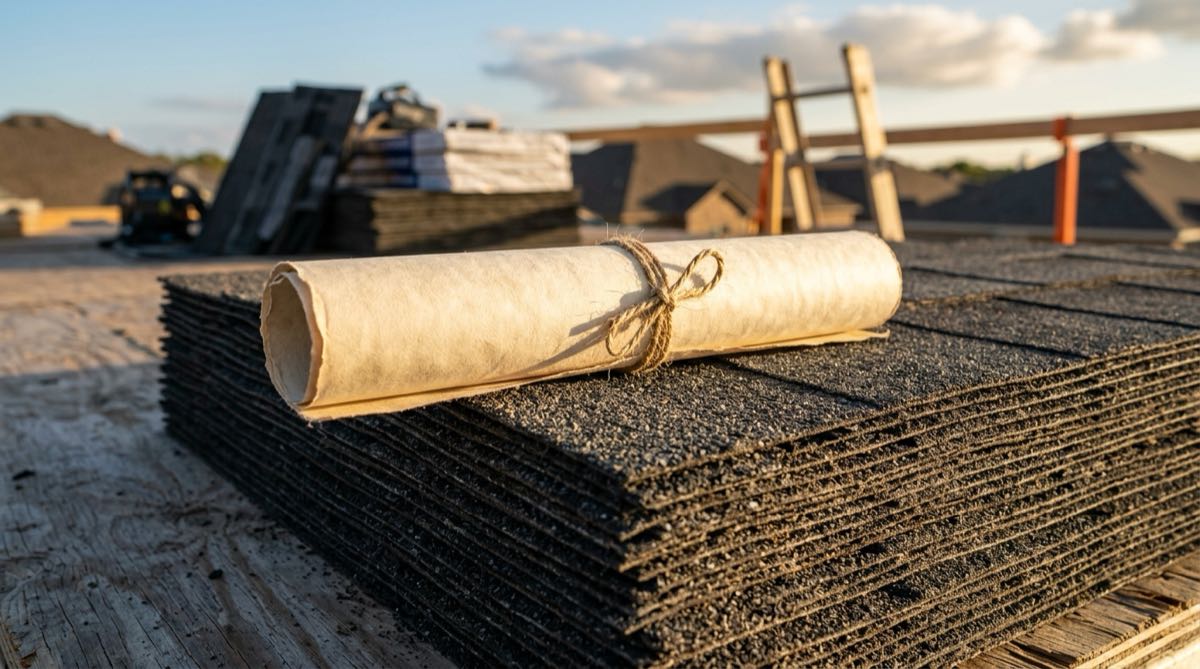
A roof estimate that lists "warranty" as a single line is quietly skipping the most important distinction in the whole document: that line is actually two separate promises, from two different parties, that can fail independently of each other. The shingle can perform exactly as advertised for forty years while the installation underneath it leaks in year three — and which of those two problems you're covered for depends on which warranty is actually in force.
Two Warranties, Not One
The legal distinction is real, not just marketing language. Roofing installed into a house is treated differently under warranty law than a roofing product bought off a shelf — our guide to how long a roof actually lasts covers that Magnuson-Moss Warranty Act distinction in more depth, along with why the manufacturer's headline warranty year figure is a lab-tested defect promise, not a field guarantee for your specific roof.
What that guide doesn't get into is what these warranties actually contain once you're comparing real contractor bids against each other — which is the point of this one.
The manufacturer warranty covers the shingle (or other roofing material) failing to perform as the maker specified — granule loss, cracking, or a genuine manufacturing defect. It's backed by the manufacturer regardless of who installs it, though the length and scope of coverage change significantly based on who installs it, covered below.
The workmanship warranty covers a roof that leaks or fails because of how it was installed, not because the material itself was defective — flashing done wrong, nails driven at the wrong angle, an underlayment detail missed at a valley. By default, this is a promise from your specific contractor, which is only as good as that contractor still being in business when you need it.
What Do the Major Manufacturers Actually Offer?
Structured in tiers, and the tiers are where the real coverage differences live.
GAF runs three common residential tiers. System Plus covers material defects only. Silver Pledge adds contractor workmanship coverage on top of that. Golden Pledge — GAF's top tier — adds a longer, manufacturer-backed workmanship term and even covers tear-off costs if a covered failure requires replacement, but it's restricted to contractors holding GAF's Master Elite certification, a credential the company states goes to a small share of roofing contractors nationally (per published GAF-authorized contractor guidance comparing the three tiers, retrieved 2026-08-30).
Owens Corning follows a similar shape. Its top residential tier, Platinum Protection, is available only through Platinum Preferred certified contractors and is commonly cited at up to 50 years of material coverage plus decades of workmanship coverage backed directly by Owens Corning rather than just the installing contractor — meaning if that contractor goes out of business, the manufacturer itself still stands behind the labor warranty at that tier. Owens Corning's own newsroom material confirms the structural point directly: the company's top contractor tier gets a workmanship warranty backed by Owens Corning specifically, distinct from and longer than what a non-certified installer can offer (Owens Corning newsroom, retrieved 2026-08-30).
CertainTeed splits it most explicitly into two named products. SureStart is the material-defect warranty — non-prorated, meaning it pays 100% of material and labor costs during its covered period rather than a shrinking percentage — and it transfers to a new owner at no cost during that period. SureStart PLUS is the separate workmanship layer, available only through certified contractors, and CertainTeed states plainly that this is the only one of its programs where the company itself stands behind the installation for 25 years, not just the material — with the exact coverage star-rating (4-Star vs. 5-Star) again set by the installing contractor's certification tier, ShingleMaster PRO versus ShingleMaster PREMIER (CertainTeed, retrieved 2026-08-30).
The pattern across all three companies is the same: the baseline material warranty is available no matter who installs the roof, but the meaningfully better version — where the manufacturer, not just the contractor, is on the hook for workmanship — only exists if you hire an installer certified at the right tier with that specific manufacturer.
Why Does the Installer's Certification Actually Matter?
Because it's the one factor that decides which warranty tier is even available to you, independent of which shingle you pick.
A homeowner comparing three bids on the identical shingle product can end up comparing three genuinely different warranty products, because only one of the three contractors happens to be certified at the top tier with that manufacturer. That's a detail easy to miss when bids are compared mainly on price and material — the certification line is usually one sentence in the proposal, if it's stated at all.
It's worth asking directly: is this contractor certified with the manufacturer being quoted, and at which tier? A "yes, we're certified" answer without a specific tier name (Master Elite, Platinum Preferred, ShingleMaster PREMIER) is worth pressing on, since the base-level certifications these programs also offer don't unlock the enhanced, manufacturer-backed workmanship coverage described above.
What Actually Voids a Warranty?
More often than homeowners expect, and rarely for a reason stated clearly at signing.
Inadequate attic ventilation is one of the most commonly cited reasons a material warranty claim gets denied — most major manufacturers treat adequate ventilation as a stated condition of coverage, not a suggestion. Our roof ventilation guide covers the intake-to-exhaust mechanics behind that requirement and how to check your own attic without hiring anyone, so it isn't repeated here.
Beyond ventilation, the other common triggers are mixing manufacturer and off-brand accessory products in the same roofing system (starter strips, ridge cap, underlayment from a different maker than the shingle), skipping documented periodic maintenance where the warranty requires it, and — for the workmanship layer specifically — any repair or alteration made by someone other than a contractor authorized under that warranty. None of these are unusual conditions, but all of them are the kind of detail that only shows up when you read the actual warranty document rather than the brochure summary.
Does a Roof Warranty Transfer If You Sell the House?
Often, but with real conditions attached rather than automatically.
CertainTeed's SureStart, for example, is explicitly transferable to a new owner at no cost during the SureStart period. The enhanced, contractor-certification-gated tiers commonly carry their own separate transfer process — often a defined window after closing and a registration step, rather than something that happens on its own when the deed changes hands. If a transferable warranty is part of what you're paying for, get the actual transfer procedure in writing rather than assuming "transferable" on a brochure means nothing further is required.
What to Ask Before You Sign
Ask which specific manufacturer program is being quoted by name — not just "lifetime warranty," but System Plus, Silver Pledge, Golden Pledge, Platinum Protection, SureStart, or SureStart PLUS, since those names carry specific, checkable coverage terms. Ask whether the contractor is certified at the tier required for the workmanship portion, and ask them to show the certification rather than just state it. Ask what voids each of the two warranties, specifically — ventilation, off-brand accessory products, missed maintenance — and ask what the transfer process looks like if you plan to sell within the coverage period. For the rest of what a complete written estimate should cover beyond warranty terms, how to read a roof estimate walks through the full line-item checklist.
Frequently Asked Questions
What's the actual difference between a manufacturer warranty and a workmanship warranty?
The manufacturer warranty covers defects in the shingle or roofing material itself, backed by the company that made it. The workmanship warranty covers installation errors — the roof leaking because it was installed wrong, not because the shingle failed — and by default it's backed by whichever contractor did the work, not the manufacturer.
Why do some roofers offer a much longer workmanship warranty than others?
Because the major manufacturers gate their best workmanship coverage behind contractor certification tiers — GAF's Master Elite, Owens Corning's Platinum Preferred, CertainTeed's ShingleMaster PRO or PREMIER. A certified installer can offer a manufacturer-backed workmanship warranty running into decades; an uncertified one can only offer their own company's promise, which is only as good as that company still being in business.
Does poor ventilation actually void a roofing warranty?
For most major manufacturers, yes — adequate attic ventilation is typically a stated condition of the material warranty, and inadequate ventilation found during a claim inspection is a common reason claims get denied. Our roof ventilation guide covers the intake and exhaust mechanics behind the requirement.
Does a roof warranty transfer if I sell my house?
Often, but not automatically. CertainTeed's SureStart, for example, transfers to a new owner at no cost during the SureStart period. Enhanced, contractor-certification-gated warranties commonly carry their own transfer window and paperwork requirement after a sale — confirm the exact process in writing rather than assuming it carries over on its own.
Warranty terms are published manufacturer program details as of this writing and change over time — confirm current terms directly with the manufacturer or contractor before signing.
Comparing bids and want to know if the numbers are realistic first?
Open the calculator