Roof Replacement Cost in Charlotte: What You'll Actually Pay
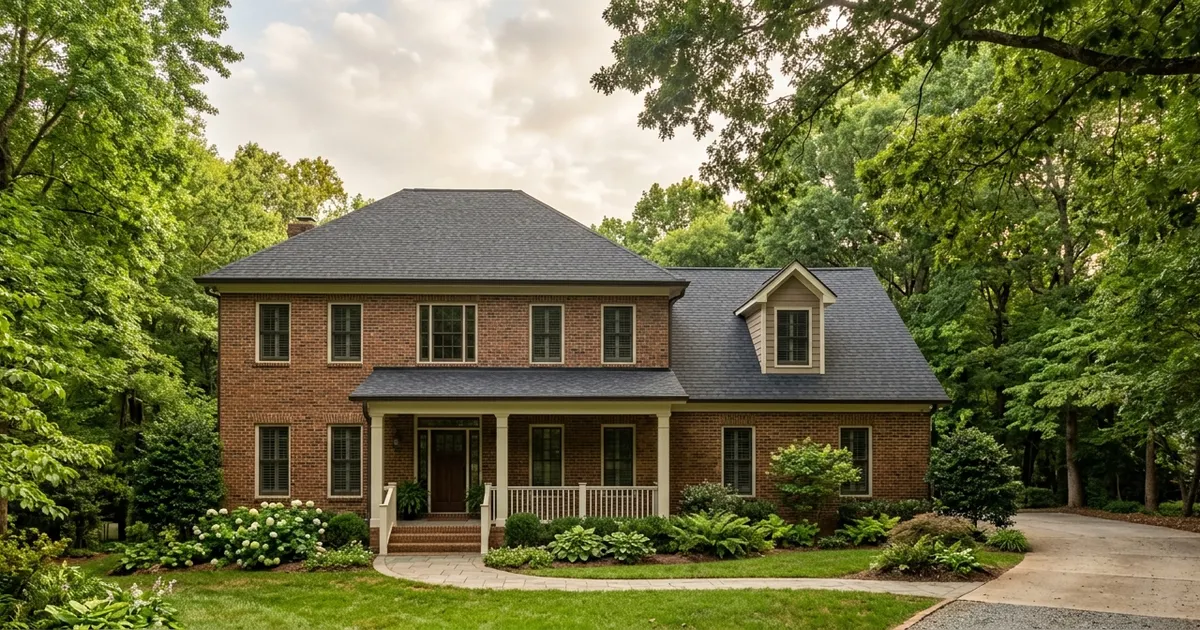
Replacement is the one moment a Charlotte roof can get real algae protection built in — and it's also the only moment that makes sense to do it. The trade group representing asphalt shingle manufacturers is direct that adding zinc or copper strips to an existing roof causes its own problems, either exposed nails that can leak over time or a broken sealant bond (Asphalt Roofing Manufacturers Association, retrieved 2026-08-14). If you're already tearing off and starting fresh, that objection disappears.
What Does a Roof Replacement Cost in Charlotte?
$11,900 to $16,000 for a typical single-story home, before anything unexpected turns up once the old roofing comes off.
That range comes from a 0.80× North Carolina labor multiplier and a $160 baseline permit fee, run against a 2,000 sq ft home with moderate pitch and a single layer of tear-off — one of the more affordable labor markets this site covers. The calculator below prices your specific house.
First time here? for a 2,400 sq ft home.
We can't load current pricing data right now — and we'd rather show you nothing than guess at a number this big. Please refresh in a moment.
Why Replacement Is the Real Window for Algae Protection
Because the fix that works best is also the one you can't add cleanly later.
The North Carolina Piedmont's humid subtropical climate is exactly the kind of warm, humid, moisture-retaining environment that lets black algae — Gloeocapsa magma — take hold on a roof, usually on the shaded side that gets the least direct sun (ARMA, retrieved 2026-08-14). Zinc and copper strips installed along the ridge work by releasing metal ions with every rain, which wash down the roof and inhibit new algae growth on the slope below. The timing problem is what ARMA's own guidance flags: attaching strips to a roof that's already finished means either nailing through a completed system or breaking the existing sealant, both of which trade a cosmetic fix for a real leak risk. At replacement, the strip goes in as part of the build — no retrofit tradeoff at all.
If you're seeing algae on your current roof and aren't ready to replace it yet, that's a different, existing-roof problem with a different fix — our roof moss removal guide covers what actually works without damaging shingles you're keeping.
Why Inland Wind Is a Real Factor Here, Not Just a Coastal Concern
Charlotte doesn't touch the coast, and it still felt a hurricane in 2024.
When Hurricane Helene made landfall and moved inland in September 2024, it was traveling at roughly 28 mph — notably faster than the 12 to 14 mph typical of most tropical systems — and that speed is exactly what let it carry damaging wind gusts far further inland than a slower-moving storm would manage before losing strength, producing 80 to 90 mph gusts in parts of the North Carolina mountains hundreds of miles from where it made landfall (WLOS, retrieved 2026-08-14). Charlotte sits well east of the hardest-hit mountain counties, but the same mechanism applies at a smaller scale across the whole inland Piedmont: a fast-moving storm doesn't need to be at the coast to still be doing real wind work. That's a meaningfully different exposure than the coastal wind-mitigation inspections our Florida guide covers, or the Gulf-proximity wind our Texas guide addresses — Charlotte's risk isn't storm surge or landfall-strength wind, it's a fast-moving system that hasn't finished losing energy by the time it arrives. Fastening and wind rating aren't just a beachfront question in this region.
What to Confirm Before You Sign in Charlotte
Ask directly whether zinc or copper algae strips are included in the quote, and if not, what adding them would cost as part of this job rather than a future retrofit.
Ask what wind rating the shingle carries and whether the fastening pattern accounts for gusts beyond a routine thunderstorm — not because Charlotte faces coastal hurricane conditions, but because 2024 showed the metro isn't outside the range of real storm-driven wind either. For what a complete quote should itemize beyond these Charlotte-specific questions, how to read a roof estimate covers it line by line, and how to get roofing quotes covers comparing bids from more than one contractor fairly.
Frequently Asked Questions
Should I add zinc or copper strips when I replace my roof in Charlotte?
Worth asking about directly. The Piedmont's humid climate is a genuine algae risk, and installing strips at replacement avoids the leak risk that comes with retrofitting them onto a finished roof later. It's a small addition to price into the job now rather than a separate project afterward.
Does Charlotte really need to worry about hurricane wind if it's not coastal?
To a real but different degree than the coast. Charlotte isn't at risk of storm surge, but fast-moving storms like Hurricane Helene in 2024 have shown the metro can see genuine tropical-storm-force wind gusts well after landfall — worth a wind-rating conversation even though it's an inland market.
Why is Charlotte's roof replacement cost lower than most other cities on this site?
North Carolina's labor rate prices at roughly 0.80× the national baseline in our model, one of the lowest multipliers we track — that's the main driver, not a difference in job complexity or material availability.
Will homeowners insurance cover algae staining or storm wind damage in Charlotte?
Algae staining is treated as gradual, cosmetic wear and generally isn't covered. Sudden wind damage from a documented storm event is a different category and is often covered — our insurance claim guide covers what insurers typically look for when reviewing that kind of claim.
Cost data updated August 2026. Figures are published estimates and vary by roof size, pitch, material, and local permit fees.
What do you want to do next?
Three ways we can help from here.
Get the free contractor checklist → 7 questions to ask any roofer before you call. Know what to ask, and what a good answer sounds like.