Roof Replacement Cost in Florida: What You'll Actually Pay
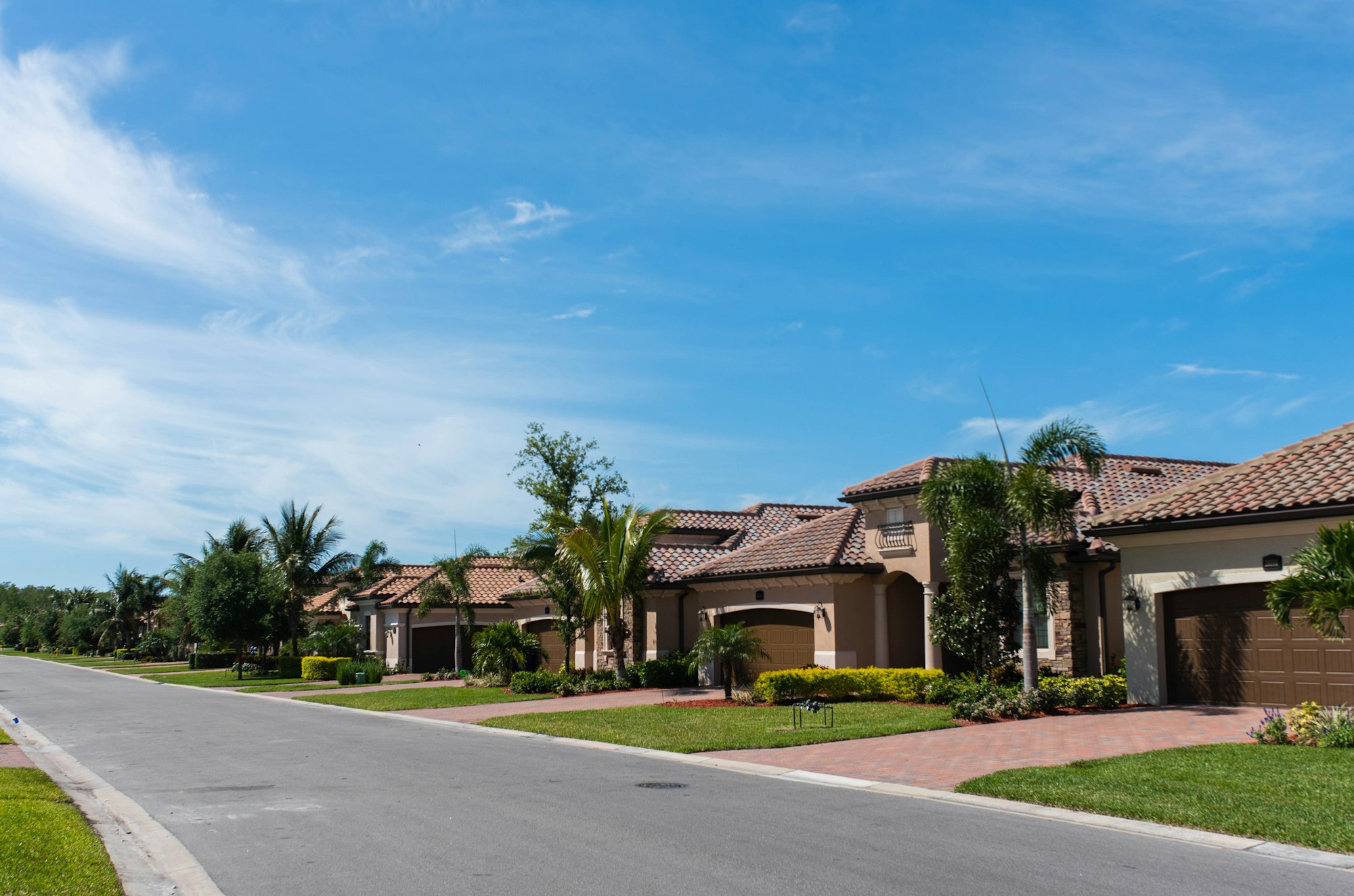
A roof replacement in Florida typically runs $12,500 to $16,900 for a 2,000 sq ft home with architectural shingles — below the national range, since Florida's labor costs price below the US baseline even with higher permit fees.
What Does a Roof Replacement Cost in Florida?
Between $12,500 and $16,900 for a typical single-story home, before any structural surprises.
That figure comes from real numbers, not a national average with "Florida" dropped into the headline. Our cost model prices Florida labor at 0.85× the national baseline against a $300 permit fee — notably higher than most other states we cover, which reflects Florida's more involved wind-resistant construction requirements. For a 2,000 sq ft home, moderate roof pitch, architectural shingle, and one layer of old roofing to remove, that works out to $12,500 on the low end and $16,900 on the high end.
Your own number moves with four things: roof size, pitch, material, and how many layers of old roofing come off. Steeper pitches cost more everywhere — our model applies a labor premium on top of the base Florida rate once pitch goes past moderate. Metal, tile, and slate all price higher per square than asphalt shingle; the 0.85× multiplier applies to whichever material you pick, it just scales the whole range together, and tile is genuinely common in Florida for the wind and heat reasons below.
That's four variables, which is why a single number for "Florida" isn't your quote — it's a starting range. The calculator below runs the same math behind these figures for your specific house.
First time here? for a 2,400 sq ft home.
We can't load current pricing data right now — and we'd rather show you nothing than guess at a number this big. Please refresh in a moment.
What's Different About Roofing in Florida?
Florida is one of the few states where a roof inspection can directly and substantially lower your insurance bill, and most homeowners never get one done.
Insurers in Florida are required by law to offer discounts for wind mitigation features — things like a securely attached roof deck, hip roof shape, and secondary water barriers (Florida Department of Financial Services, retrieved 2026-08-03). Getting the discount requires a wind mitigation inspection, typically completed by an authorized inspector such as a licensed contractor, building code inspector, engineer, or architect. The exact discount amount is set by your individual insurer, not a fixed statewide number — ask your own carrier what a completed inspection would be worth on your policy before assuming a figure.
If you're replacing your roof anyway, this is the moment to have that inspection done — a new roof built to current wind-mitigation standards is exactly what qualifies for the larger discounts, and doing the inspection right after the work is finished means you're not paying for coverage you've already earned.
What License Does a Florida Roofer Actually Carry?
The prefix on the license number tells you more than most homeowners realize — and it's worth checking before you assume a contractor can legally work at your address.
Florida issues two distinct types of roofing contractor license through the Department of Business and Professional Regulation. A Certified Roofing Contractor license — number prefixed "CCC" — has passed the state exam and can legally work anywhere in Florida. A Registered Roofing Contractor license — prefixed "RC" — is tied to a specific local jurisdiction's own competency exam and doesn't authorize work outside that area (Finturf, Florida roofing license reference, retrieved 2026-08-29). Both require real insurance — general liability and workers' compensation coverage for any employees — before DBPR will issue either credential.
Practically: if a contractor is working outside the specific county or city where they're actually licensed, ask directly whether they're carrying a CCC or an RC — an RC-licensed roofer legitimately operating in one county has no standing to pull a permit in the next one over.
Does Your Florida Roof Fall Inside a High-Velocity Hurricane Zone?
If your address is in Miami-Dade or Broward County, the answer is yes — and it changes what a compliant roof actually looks like, beyond the wind mitigation discount covered above.
Miami-Dade and Broward counties fall inside Florida's High-Velocity Hurricane Zone (HVHZ), established after Hurricane Andrew and enforcing the strictest roofing standards in the country: design wind speeds run roughly 170 to 180 mph, and every roofing product installed — not just the general Florida Building Code approval that's sufficient elsewhere in the state — must carry its own Miami-Dade or Broward Notice of Acceptance (NOA) (Wind Load Solutions, HVHZ reference, retrieved 2026-08-29). A shingle approved for use in Orlando or Tampa isn't automatically approved for a house in Miami — the product itself needs the county-specific paperwork, independent of the general statewide code.
If you're outside Miami-Dade or Broward, none of this applies to you directly — but it's worth confirming your contractor knows the difference, since a crew that primarily works HVHZ jobs and one that doesn't are following genuinely different product-approval rules.
What Should You Do Before Signing?
Get the same three things you'd want anywhere: a written scope, a real material spec, and the permit named as its own line.
Ask whether the new roof will qualify for wind mitigation credits, and get the roof-deck attachment method and any secondary water barrier named specifically in the contract — these are exactly the features the inspection form checks for. Confirm which material the quote assumes. Tile and metal are common in Florida for wind and heat performance, and they price differently from asphalt shingle. Schedule the wind mitigation inspection once the new roof is done, rather than assuming your insurer will apply a discount automatically. Check whether the contractor holds a CCC or an RC license, especially if they're working outside their home county. If you're in Miami-Dade or Broward, ask for the Notice of Acceptance number for the specific product being installed — a general Florida Product Approval isn't the same document.
Our full roof replacement cost guide covers what a complete estimate should include and how to compare bids fairly, across any state. Our insurance claim guide covers percentage wind and hurricane deductibles, which Florida uses and which catch a lot of homeowners by surprise.
Frequently Asked Questions
How much can wind mitigation actually save me?
It varies by insurer and by which specific features your home has, but the maximum discount allowed can reach 88% of the wind portion of your premium. The only way to know your actual number is to get the inspection done and ask your carrier.
Does Florida require a specific roofing material?
No single material is mandated statewide for typical residential reroofing, but wind-resistant construction standards apply broadly, and specific jurisdictions may have additional requirements. Confirm with your local permitting office.
Will my homeowners insurance help pay for storm damage?
Often, for sudden covered damage — but Florida policies commonly apply a percentage-based hurricane or wind deductible rather than a flat dollar amount, which changes the math considerably. Understand your own deductible before you assume a claim will cover the whole job.
What's the difference between a Certified and Registered roofing contractor in Florida?
A Certified license (prefix CCC) passed the state exam and can work anywhere in Florida. A Registered license (prefix RC) is tied to one local jurisdiction's own exam and doesn't authorize work outside that area. Check which one your contractor holds if they're working outside their home county.
Do Miami-Dade and Broward have different roofing requirements?
Yes. Both fall inside Florida's High-Velocity Hurricane Zone, with design wind speeds around 170-180 mph and a requirement that every roofing product carry its own Miami-Dade or Broward Notice of Acceptance — the general statewide Florida Building Code approval isn't sufficient there.
Cost data updated August 2026. Figures are published estimates and vary by roof size, pitch, material, and local permit fees.
What do you want to do next?
Three ways we can help from here.
Get the free contractor checklist → 7 questions to ask any roofer before you call. Know what to ask, and what a good answer sounds like.