Roof Inspection: What It Covers, What It Costs, and How to Read the Report
What a roof inspection covers, what it costs in 2026, when it's free and why, and how to read the report you get.
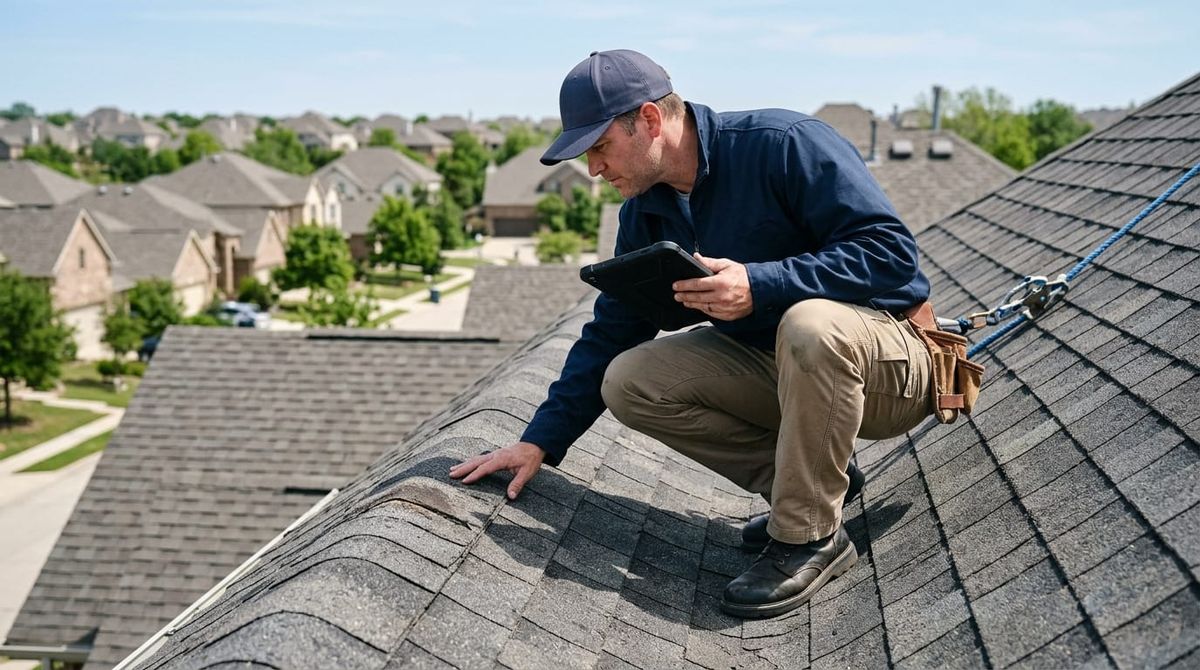
A roof inspection is a professional assessment of your roof's condition, and most cost between $150 and $400. This guide is for homeowners — if you're buying, selling, suspect a leak, or an insurer has asked for proof of condition, this covers what happens, what you pay, and what the report actually means.
What Is a Roof Inspection, Exactly?
A roof inspection is a trained assessment of whether your roof is doing its job and how much life it has left. It is not the same as the roof section of a general home inspection. A home inspector looks at the roof among fifty other systems, often from the ground or a ladder at the eave. By contrast, a dedicated roofing inspection means someone gets on the roof (or flies a drone over it), goes into the attic, and produces a report specifically about the roof.
That distinction matters whenever money is attached. Insurers, buyers, and lenders generally want the dedicated version.
You'll see it advertised under several names — roof inspection services, residential roof inspection, professional roof inspection. All of them describe the same core job. What actually varies is depth, and depth is what you're paying for.
Two related terms are worth separating now, because they get confused constantly:
- A roof certification is a document stating how much serviceable life a roof has left, usually demanded by a buyer, lender, or insurer. It is based on an inspection but is a separate, paid deliverable.
- A roof estimate is a priced proposal to do work. It is a sales document, not a diagnosis, even when it arrives formatted like one.
What Does an Inspector Actually Check?
An inspector works through four zones, and a report that skips any of them is incomplete.
Worth knowing: The attic is the zone homeowners skip and experienced inspectors weight most heavily. Water tracks along rafters and decking for months before it produces a stain on a bedroom ceiling or a visible failure outside. That lag is why an inspection that never goes indoors can honestly report "no visible damage" on a roof that is already leaking. If a quote doesn't include attic access, ask why before you book.
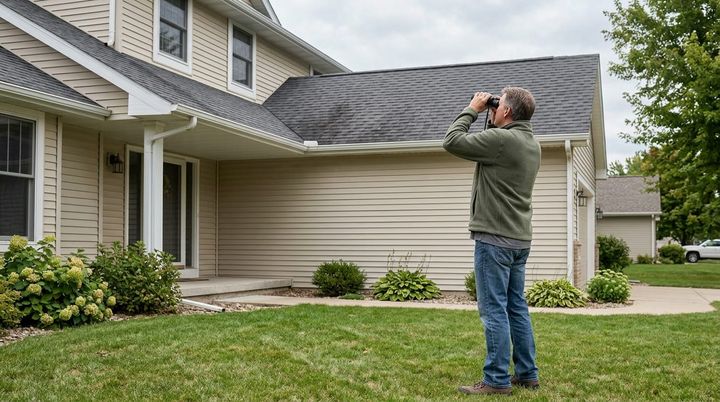
Quick self-check before you call anyone. From the ground with binoculars, you can usually spot:
- Shingles that are missing, lifted, or curling at the edges
- Dark patches where granules have worn off
- A visibly sagging ridge line or dipped roof plane
- Gutters full of granule grit after a storm
If you see any of those, an inspection is worth booking. If you see the sag, book it sooner — that one points at the structure, not the surface.
Do this from the ground. Roof falls are a leading cause of serious injury in construction, which is why OSHA requires fall protection for work six feet or more above a lower level (OSHA, retrieved 2026-07-29). Professionals climbing your roof wear harnesses and anchors for a reason. Binoculars from the lawn cost nothing and carry no risk.
What Does a Roof Inspection Cost?
Most homeowners pay $150 to $400, with the typical bill landing near $200–$350. The spread comes down to depth and access. Cost-guide data puts a basic visual inspection at roughly $150–$250, while a comprehensive inspection adding attic examination and moisture detection runs about $250–$400 (Homewyse, retrieved 2026-07-29; Angi, retrieved 2026-07-29).
What moves your number:
- Roof size and pitch. Steeper roofs need fall protection and take longer.
- Access. Two-story and complex rooflines cost more than a single-story ranch.
- Method. Drone and infrared moisture scans cost more than a walk-and-look.
- Report depth. A one-page summary is cheaper than a photo-documented report built for an insurance claim.
- Where you live. Regional labor rates move this the same way they move every trade.
If you're getting an inspection specifically to support an insurance claim, pay for the comprehensive version with photo documentation. A thin report is the most common reason a legitimate claim stalls.
When Is a Roof Inspection Free, and What's the Catch?
Free inspections are common, usually legitimate, and always a sales channel — that's the honest version.
A roofing company offering a free inspection is buying the chance to quote your repair or replacement. That's a normal business model, not a scam by itself. Plenty of reputable roof inspection companies do it, and if your roof genuinely needs work, you may not mind.
The catch is what it costs you in independence. A free inspection is performed by someone whose revenue depends on finding work. A paid inspection from an independent inspector who doesn't sell roofs has no such incentive.
Here is the decision in table form, since the right answer genuinely depends on why you're asking:
| Your situation | Free contractor inspection | Paid independent inspection |
|---|---|---|
| Visible storm damage, want a fast look | ✅ Good fit | Optional |
| Already planning to hire a roofer | ✅ Good fit | Not needed |
| Buying a house | ❌ Conflicted | ✅ Worth it |
| Disputing an insurance decision | ❌ Conflicted | ✅ Worth it |
| Selling, want a clean document | Sometimes | ✅ Worth it |
| Just want an unbiased opinion | ❌ Conflicted | ✅ Worth it |
The pattern is straightforward: whenever the report will be used to argue with someone — an insurer, a buyer, a seller — pay for independence. Whenever you're simply trying to get work scheduled, free is fine.
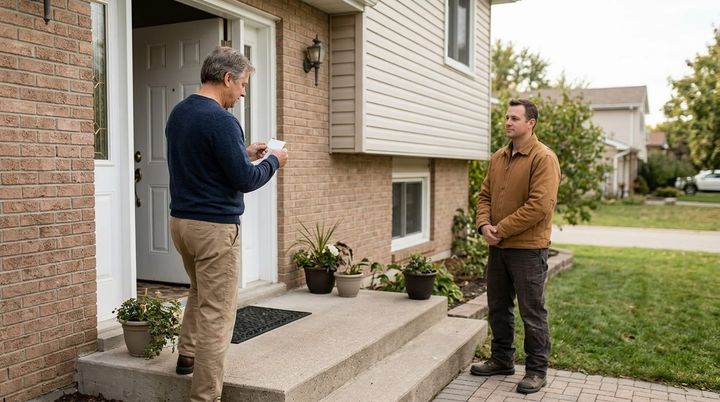
Whichever you choose, never sign anything on the roof or at the door. A legitimate contractor will let you read a proposal at your kitchen table, on your own schedule. High-pressure "sign now, today only" tactics after a storm are the single clearest warning sign in this industry.
How Often Should You Get a Roof Inspected?
Twice a year, plus after major weather. The National Roofing Contractors Association recommends inspecting roof systems at least twice annually — ideally spring and fall — and again after any significant storm event (NRCA, retrieved 2026-07-29).
The reasoning is seasonal, and it's practical:
- Spring catches what winter did — ice damage, freeze-thaw cracking, wind-lifted shingles.
- Fall catches problems before the wet season, when a small gap becomes an active leak.
- After a storm matters because wind and hail damage is often invisible from the ground, and most insurance policies have filing deadlines measured in months, not years.
For example, a hailstorm can bruise asphalt shingles without cracking them. From the driveway the roof looks untouched. The mat underneath is compromised, granules shed over the following season, and the leak arrives a year later — typically after the filing window has closed. That gap between the damage and the symptom is the entire reason the post-storm inspection exists.
As another example, take a homeowner selling in autumn who books an inspection before listing. A cracked vent boot found in September is a modest, scheduled repair. The same defect discovered by a buyer's inspector in October becomes a negotiating lever, priced at whatever the buyer's agent decides it's worth.
Two extra triggers worth adding: inspect before you list a house, and inspect when your roof passes about 15 years old regardless of how it looks. Age changes what "normal wear" means.
How Do You Read the Inspection Report?
Read it for two things: severity and evidence. Everything else is supporting detail.
Most reports sort findings into rough tiers. Terminology varies by company, but the structure is consistent:
- Immediate / active — water is getting in now. Fix this on a timeline of days.
- Deficient / needs repair — a real defect that isn't leaking yet. Weeks to months.
- Monitor / maintenance — aging or cosmetic. Track it, don't panic.
- Notes / observations — context, not defects.
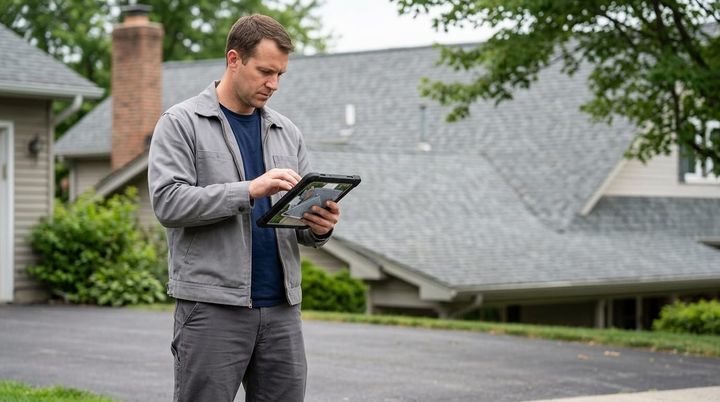
Then check the evidence behind each finding. If a claim doesn't have a photo attached, ask for one.
The single most useful test: photo-per-finding is what separates a diagnosis from a sales document. A line reading "flashing failure — recommend full replacement" with no accompanying image is an assertion, not evidence. Legitimate inspectors photograph what they find because their report has to survive scrutiny from an insurer or a buyer's agent. Anyone who resists producing images is telling you something about the quality of the finding.
Three questions worth asking about any report you receive:
- What's the estimated remaining life, and what's that based on? A number with no reasoning is a guess.
- Which findings are urgent versus optional? Good inspectors will tell you plainly. If everything is urgent, be skeptical.
- Is repair viable, or is replacement genuinely necessary? These have very different price tags and the honest answer isn't always the expensive one.
How Do You Choose a Roof Inspection Company?
Pick based on independence, documentation, and licensing — in that order.
- Independence. Does this company also want to sell you the repair? Not disqualifying, but you should know before they arrive.
- Documentation. Ask what the report includes. "Photos of every finding" should be a yes.
- Licensing and insurance. Verify the license number with your state board, and confirm they carry liability coverage. Anyone getting on your roof should have both.
- Local track record. A company with a real local history is easier to hold accountable than a crew that appeared after the last hailstorm.
- Written scope. Get in writing which of the four zones they'll cover, including the attic.
If a contractor won't put the scope in writing before the visit, that tells you what the report will be worth.
What do you want to do next?
Three ways we can help from here.
Get the free contractor checklist →7 questions to ask any roofer before you call. Know what to ask, and what a good answer sounds like.Will insurance pay?What claims cover — and what they don't.Find financingReal cost over the term, not the monthly.
Frequently Asked Questions
How long does a roof inspection take?
Most residential inspections take 45 minutes to two hours. A larger or more complex roof, or one that includes an infrared moisture scan, takes longer. If someone is done in ten minutes, they did not check all four zones.
Do I need to be home for it?
No, but it helps. Being there means you can point out where you've seen stains or drips, and you can ask questions while the inspector is still on site. That conversation is often more useful than the written report.
Will a roof inspection hurt my home sale?
Not usually. Knowing about a defect early gives you the option to fix it, price it in, or disclose it on your terms. Finding out during the buyer's inspection puts you in a worse negotiating position with less time.
Can a drone inspection replace someone getting on the roof?
For the surface, often yes — drones are good at photographing large or steep roofs safely. For flashing detail, soft decking, and the attic, no. Drone-only inspections cover one of the four zones well and the rest not at all.
Is a roof certification the same as an inspection?
No. A certification is a document stating the roof has a certain amount of remaining life, usually required by a buyer, lender, or insurer. It's typically based on an inspection but costs extra and carries a stated warranty period.
Comments ()