Roof Inspection Checklist: What to Check From the Ground and What Needs a Pro
A homeowner's roof inspection checklist — what you can safely check yourself from the ground, and what genuinely requires a professional.
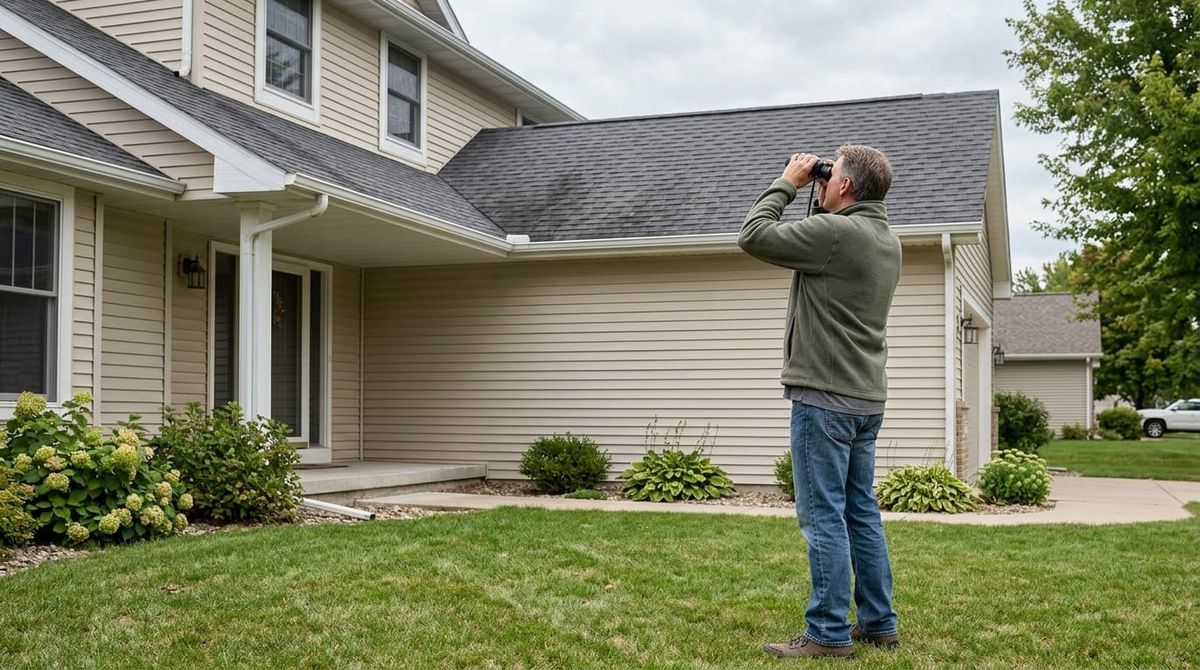
Most roof inspection checklists online are built for contractors, not homeowners. Some are commercial PDFs. Others are safety forms written for professional crews. This one is for you, standing in your own yard, trying to work out whether you need to call someone.
What Can You Safely Check Yourself?
Four things, and none of them require leaving the ground.
The left column is genuinely useful. You will not diagnose your roof from the lawn. But you will find out whether something is wrong, which is the actual decision you're trying to make.
The Ground-Level Checklist
Work through these five in order. Each takes a couple of minutes.
A note on step 4. The attic is the most useful stop on this list and the one people skip. Water tracks along rafters for months before it stains a ceiling. If you check one thing, check here.
While you're up there, look at the ventilation too. Attic ventilation is not just an energy question — it protects the roof itself. ENERGY STAR notes that winter airflow through a cold attic reduces ice damming, and summer airflow moves out superheated air, which protects shingles and removes moisture (ENERGY STAR, retrieved 2026-07-29). Blocked soffit vents are a common and fixable problem.
What Do the Findings Actually Mean?
Each finding points at something specific. Here's how to read them.
| What you see | What it usually means | How urgent |
|---|---|---|
| A few missing shingles | Wind damage, localized | Book an inspection, not an emergency |
| Granule grit in gutters | Shingles aging out, or recent hail | Worth a professional look |
| Curling or lifted edges | Heat and age, or poor ventilation | Inspection within a season |
| Sagging ridge or roof plane | Structural — decking or framing | Call someone now |
| Water stains in the attic | Active or previous leak | Inspection soon, find the source |
| Daylight through the decking | An actual hole | Call someone now |
| Musty smell, no visible leak | Trapped moisture | Ask about an infrared scan |
Two rows are marked urgent for the same reason: both suggest a problem with the structure or the envelope rather than the surface. Everything else can wait for a scheduled inspection.
Age changes how you read all of it. The same curling shingle means something different at year 5 than at year 22.
When Should You Run This Checklist?
Twice a year, and again after any significant storm.
That matches the National Roofing Contractors Association's guidance of at least two inspections annually, ideally spring and fall, plus after major storm events (NRCA, retrieved 2026-07-29). Spring catches winter damage. Fall catches summer wear before the wet season.
Post-storm timing matters more than people expect. Hail can bruise a shingle mat without cracking the surface, and that damage may not leak for a year or more — often after the insurance filing window has closed. FEMA's case-study work on hail-resistant roofing documents how differently materials survive the same storm (FEMA, retrieved 2026-07-29). Check promptly, and document what you find with photos and dates.
When Does This Checklist Stop Being Enough?
The moment the answer matters to someone other than you.
A homeowner walkaround is fine for deciding whether to call a professional. It is not enough when:
- You're filing an insurance claim. Insurers want a professional report with photo documentation.
- You're buying or selling. A buyer's inspector will look regardless. Better to know first.
- A warranty is involved. Most manufacturer warranties require documented professional inspections.
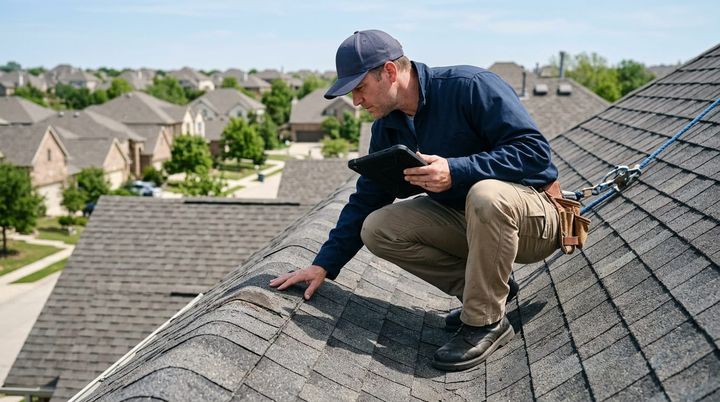
- You found something urgent. A sag or visible daylight needs a person on the roof, not more binocular work.
A professional inspection typically runs $150–$400 for a standard residential visit (Homewyse, retrieved 2026-07-29; Angi, retrieved 2026-07-29). Against a roof replacement, that's a rounding error.
What do you want to do next?
Three ways we can help from here.
Get the free contractor checklist →7 questions to ask any roofer before you call. Know what to ask, and what a good answer sounds like.Will insurance pay?What claims cover — and what they don't.Find financingReal cost over the term, not the monthly.
Frequently Asked Questions
Can I do a roof inspection myself instead of paying someone?
You can do the ground-level version yourself, and it's genuinely worth doing. You can't safely replicate a professional inspection — that requires roof access, fall protection, and knowing what soft decking feels like underfoot.
What should I use to see the roof from the ground?
Binoculars work well. A phone camera with zoom works too, and gives you dated photos worth keeping. Walk the full perimeter — problems cluster on the side facing prevailing weather.
How long does the homeowner checklist take?
About 20 minutes for a typical house, including the attic. Less once you've done it a couple of times and know your own roof.
Does a checklist inspection count for insurance purposes?
No. Insurers want a professional report with photo documentation and a dated assessment. Your own walkaround is useful for deciding when to call someone, not as claim evidence.
What if I can't get into my attic?
Then check ceilings and upper walls carefully instead, and mention the access limitation when you book a professional inspection. Inaccessible attics are common and an inspector will plan around it.

Comments ()