Free Roof Inspection: Legitimate or a Scam? How to Tell the Difference
Why roofers offer free inspections, how to spot a storm chaser, and what you should never sign at your own front door.
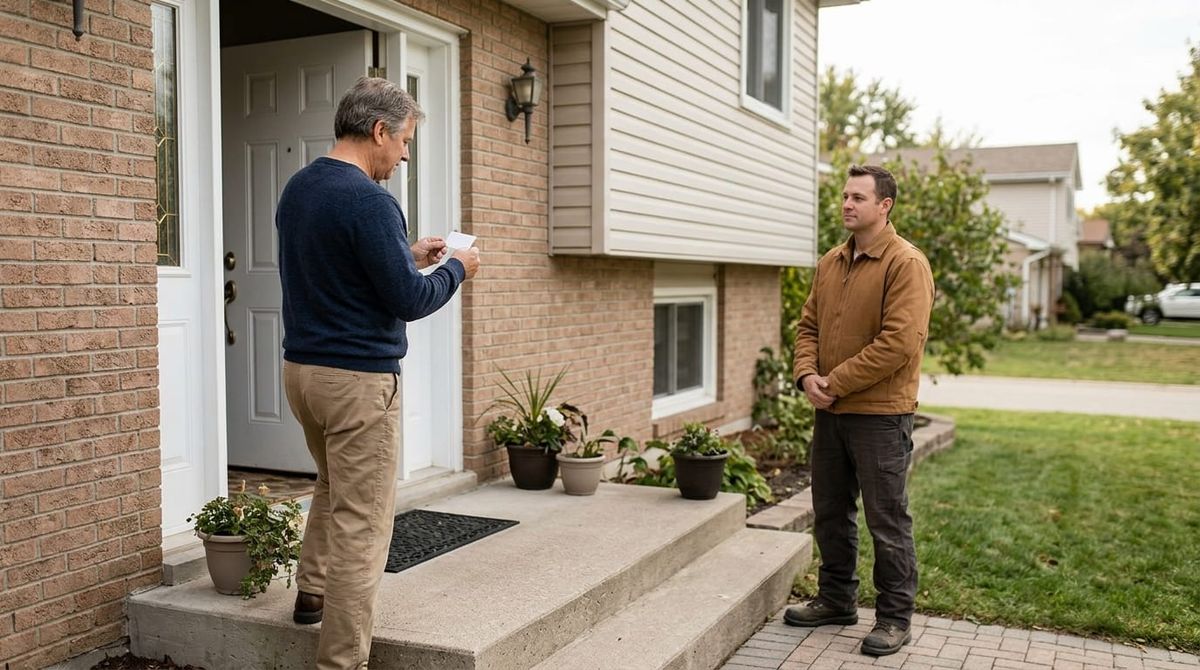
Most free roof inspections are legitimate — but "free" is a sales channel, not a favor, and after a storm it's also the favorite opening line of the people you should avoid. This is for anyone who just had someone knock on their door, or who typed "is this a scam?" into Google before letting a stranger onto their roof. Good instinct. Here's how to sort the real ones from the rest.
Are Free Roof Inspections Legitimate?
Usually, yes. A free roof inspection is a standard lead-generation offer: a roofing company inspects at no charge because it expects to win some percentage of the repair and replacement work that follows. Plenty of well-established, licensed local roofers run exactly this model, and there's nothing shady about it.
The problem is that the same three words are the standard opening for the industry's worst actors. Because the offer costs nothing, it works equally well for a reputable company building a pipeline and for a crew that will be in another state by winter.
So the useful question isn't "is free bad?" It's "who is offering, and how did they find me?"
The distinction that actually matters: a free inspection isn't cheaper than a paid one — it's paid for differently. You're not paying cash; you're paying in independence. The person assessing whether your roof needs replacing earns nothing if the answer is no. That structural conflict is present even when the contractor is entirely honest, which is why the same free inspection can be perfectly fine for scheduling repairs and completely inappropriate for settling an insurance dispute.
Why Do Roofers Offer Inspections for Free?
Because inspection is cheap for them and the job it leads to is not.
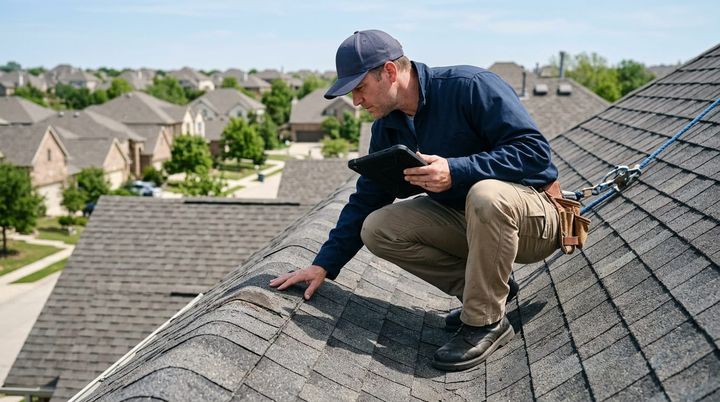
An experienced roofer can assess a typical residential roof in about an hour. That hour costs the company very little. A full replacement, meanwhile, commonly runs from several thousand dollars into five figures. If free inspections convert even a modest share of the time, the math works comfortably in the roofer's favor.
Three legitimate reasons a company offers it:
- Pipeline. It's cheaper than buying leads from an ad network.
- Competitive pressure. Once local competitors offer free inspections, charging becomes a disadvantage.
- Genuine goodwill after storms. Some established local companies do it to build long-term community reputation, which is worth more to them than an inspection fee.
None of that requires deception. It does mean the inspection is the top of a sales funnel, and you should read the resulting report knowing that.
What Does a Storm Chaser Look Like?
A storm chaser is an out-of-area contractor who follows severe weather, works fast, takes payment, and leaves — often before defects surface and usually beyond the reach of your local licensing board.
They're not subtle once you know the signals.
The same six signals in text, since the chart above is an image:
| Signal | Established local roofer | Storm chaser |
|---|---|---|
| How they found you | Referral, search, signage | Knocked on your door |
| Address | Physical local office | P.O. box, or none given |
| Licensing | Number provided on request | Vague, deflects, "it's on file" |
| Payment terms | Staged, tied to milestones | Large cash sum upfront |
| Timeline | You set the pace | "Sign today or lose the price" |
| Insurance handling | You stay in control of the claim | Wants your claim rights assigned |
Rows are editorial synthesis of BBB and state consumer-protection guidance, compiled July 2026.
The BBB's guidance is blunt on the first row: reputable roofing companies rarely go door to door, and storm chasers typically arrive within days of a hail or wind event offering free inspections and pressure to sign immediately (BBB Scam Alert, retrieved 2026-07-29).
To be fair to the honest ones: door-to-door canvassing is legal, and some legitimate contractors do it in storm markets. It is a strong signal, not proof. Treat it as the cue to start verifying, not as a verdict.
Two tactics worth naming specifically, because they're the ones that cost people the most:
- Manufactured damage. Consumer-protection agencies have documented contractors exaggerating damage after a free inspection, and in some cases faking it outright — including placing loose shingles on a roof to photograph as storm damage (Connecticut Department of Consumer Protection, retrieved 2026-07-29).
- Impersonating a local company. Some crews use names, logos, or truck livery close enough to an established local roofer that homeowners believe they're dealing with a company they already trust.
The trend is worth watching, even if the absolute numbers stay small. Connecticut's Department of Consumer Protection logged 285 roofing-related complaints in 2024, up from 247 in 2023 — roughly a 15% year-over-year increase (CT DCP, retrieved 2026-07-29).
Read that number carefully, because it cuts both ways. A few hundred complaints in a state with well over a million homes means the odds of any given homeowner being targeted are low. It also means complaints are rising, and that "roofing-related complaint" covers ordinary contract and workmanship disputes, not just fraud. The honest summary: this is uncommon, worth guarding against, and cheap to guard against.
What Should You Never Sign at the Door?
Anything. But one document deserves its own warning.
An assignment of benefits (AOB) is a contract that transfers your right to deal with your insurer over to the contractor. Once signed, the contractor negotiates the claim, receives the payment, and decides what work gets done. You've handed over control of your own claim to someone you met twenty minutes ago.
AOBs are legal in many states and are occasionally used legitimately. But signed under pressure on a doorstep, they're one of the most expensive mistakes a homeowner can make. Related paperwork to refuse on the spot:
- Any contract with blank fields to be "filled in later"
- A "contingency agreement" that locks you to one contractor pending insurance approval
- Anything that says you'll pay if the claim is denied, when you haven't read it carefully
- An offer to waive, cover, or "eat" your deductible — many states expressly prohibit contractors from doing this, and where it's prohibited it can create exposure for the homeowner too. Check with your state insurance department before entertaining it
To illustrate how that plays out — this is a constructed scenario, not a documented case: a homeowner signs an AOB after a hailstorm. Months later the contractor has settled directly with the insurer for less than the job needed, done partial work, and moved on. The homeowner wants to reopen the claim. They can't. They gave away the standing to do it.
AOB law varies significantly by state. Florida sharply restricted residential property AOBs in 2022–23, and several other states have constrained them since. Check where you live before signing anything that mentions assignment.
The rule is simple and costs you nothing: nothing gets signed outdoors. Take the paperwork inside, read it tomorrow, and call the company's published office number rather than the mobile number on the card.
How Do You Verify a Roofer Before Letting Them Up?
Five checks, and none of them take more than a few minutes.
- Verify the license with your state board. Ask for the number and look it up yourself. Don't accept a photo of a card.
- Confirm liability and workers' compensation insurance. Ask for a certificate sent directly from their insurer. If someone is injured on your roof uninsured, that can land on your homeowner's policy.
- Check the physical address. Search it. An office or a yard is a good sign. A P.O. box or a residential address several states away is not.
- Look up the business, not the salesperson. Search the company name with the word "complaints," and check the BBB profile and your state consumer-protection office.
- Ask how long they've worked in your specific town. A vague answer to a simple question is itself an answer.
If someone objects to any of these, that resolves the question for you.
When Should You Pay for an Independent Inspection Instead?
Whenever the report is going to be used to argue with someone.
| Your situation | Free contractor inspection | Paid independent inspection |
|---|---|---|
| Getting repair work scheduled | ✅ Fine | Unnecessary |
| Comparing quotes from roofers | ✅ Fine | Unnecessary |
| Filing or disputing an insurance claim | ❌ Conflicted | ✅ Worth it |
| Buying or selling the house | ❌ Conflicted | ✅ Worth it |
| You just want the truth, no agenda | ❌ Conflicted | ✅ Worth it |
A standard independent inspection generally runs $150–$400, with comprehensive versions at the upper end (Homewyse, retrieved 2026-07-29; Angi, retrieved 2026-07-29). Budget more if you need a licensed inspector's or engineer's report for a claim or a sale — those are a different, costlier product than a routine condition check. Either way, the inspector has no stake in the answer, and when a settlement or a sale is attached that neutrality is worth many times the fee.
What do you want to do next?
Three ways we can help from here.
Get the free contractor checklist →7 questions to ask any roofer before you call. Know what to ask, and what a good answer sounds like.Will insurance pay?What claims cover — and what they don't.Find financingReal cost over the term, not the monthly.
Frequently Asked Questions
Someone knocked on my door after a storm. Is that automatically a scam?
Not automatically, but it's the single strongest warning signal. The BBB notes that legitimate roofing companies generally don't canvass door to door. Take the card, don't let them on the roof that day, and verify the company independently before calling back.
They said my neighbors already signed up. Should that reassure me?
No. Social proof is a standard pressure tactic and it's easy to fabricate. If it's true, it's also easy to check — ask the neighbor yourself.
Is it a scam if they offer to cover my insurance deductible?
Treat it as disqualifying. Many states expressly prohibit contractors from rebating or absorbing a homeowner's deductible, and where that's the case the arrangement can create exposure for you as well as the contractor. Rules vary by state, so check with your state insurance department — but there is rarely a good reason to accept the offer.
What if I already signed something?
Read it immediately and look for a cancellation clause. The FTC's Cooling-Off Rule generally gives you three business days to cancel a sale of $25 or more made at your home, and some states add their own — occasionally longer — windows for storm-repair contracts (FTC, retrieved 2026-07-29). Exemptions exist, so contact your state consumer-protection office promptly. The window is short either way.
Can I just get a free inspection and not hire them?
Yes, and reputable companies expect it. You're under no obligation. Just be aware the report comes from someone with a financial interest in finding work, so get a second opinion before authorizing anything major.
Comments ()