Window Replacement Cost: Insert vs. Full-Frame, and Why It Matters
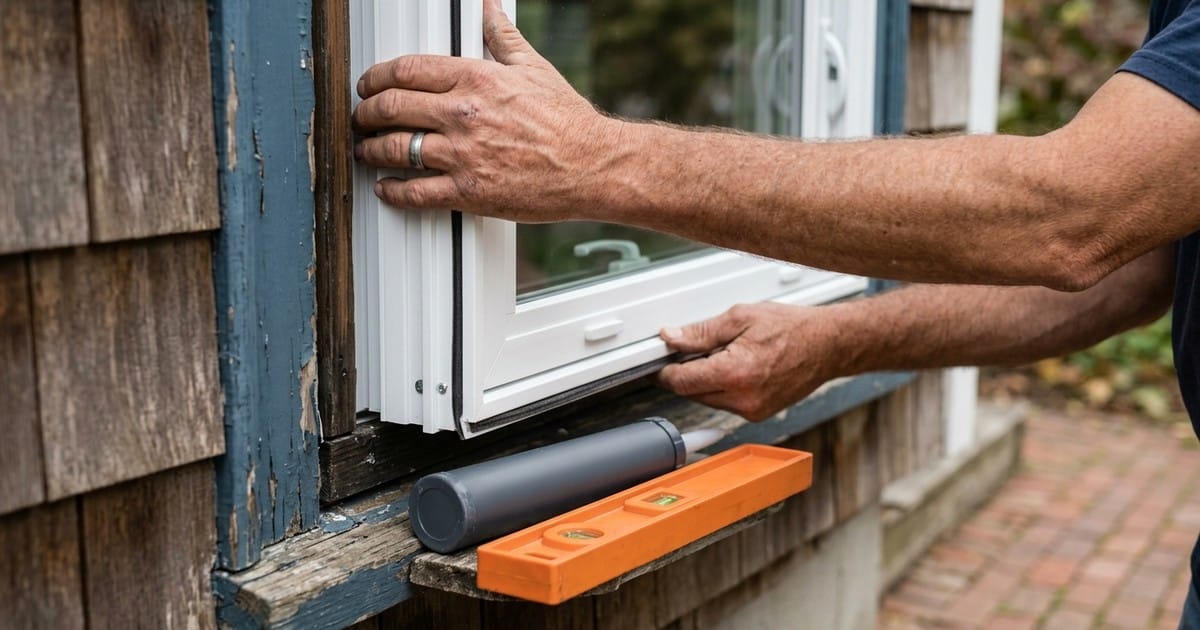
Two quotes for the same window can differ by $600 or more, and it's rarely because one contractor is padding the number. It's because they're pricing two different jobs. An insert (or "pocket") replacement drops a new window into your existing frame; a full-frame replacement tears the old frame out entirely. Which one you actually need depends on one thing: whether that existing frame is still sound.
Insert vs. Full-Frame: What Actually Decides It
The frame test is simple, and it's worth doing yourself before a contractor ever shows up.
An insert replacement works "when the frame is still square, level, and undamaged" — the new window fits into what's already there, with far less labor and disruption. Full-frame replacement becomes necessary "when the existing frame has rot, warping, or structural damage," and for good reason: a warped or deteriorating frame won't let a new window seal properly, insert or not (This Old House, retrieved 2026-08-06).
| Insert (pocket) | Full-frame | |
|---|---|---|
| Cost per window | $100–$400 | $180–$1,500 |
| Requires | Sound, square, undamaged frame | Rot, warping, or structural damage present |
| Disruption | Interior trim only | Full opening rebuilt, exterior trim too |
The upside of full-frame, beyond fixing a damaged frame: since the opening is fully exposed, it's also the moment to address water damage or poor insulation a contractor would otherwise never see. If you're already paying for the bigger job, that's worth asking about rather than leaving on the table.
The Roofing Connection Most Homeowners Miss
Window frame rot doesn't usually start with the window. It starts with water that had somewhere else to go and didn't.
There's a specific, well-documented mechanism behind this, and it has a name: kickout flashing. It's a small piece of flashing that diverts water running down a roof-to-wall junction into the gutter instead of letting it spill down the wall. The U.S. Department of Energy's Building America program is direct about what happens when it's missing or undersized: the resulting water flow "is likely to eventually rot out the window trim and overcome any window flashing, getting inside the wall to cause more damage" (Building America Solution Center, PNNL, retrieved 2026-08-06). It's a roughly $20 part, and its absence is a documented cause of exactly the kind of window frame damage that turns an insert job into a full-frame one.
If you're dealing with a window frame problem near a roofline, it's worth checking specifically for kickout flashing at that junction before assuming the window itself is simply old — our roof flashing guide covers flashing types and failure points in more depth, and our gutter cost guide covers what a proper gutter system should actually handle.
Confirm the Frame Test, Not Just the Result
A contractor's claim about frame condition is only as good as how they checked it.
Ask the contractor to show you the frame test, not just tell you the result. "Square, level, and undamaged" is a specific claim — a contractor who's actually checked can point to what they checked, not just quote a price. If it's full-frame, ask what they found when the opening was exposed. Rot that goes deeper than the frame itself, or a water source that's still active, is worth knowing about before the new window goes in over the same problem.
Frequently Asked Questions
How do I know if I need insert or full-frame replacement?
The frame's physical condition decides it, not your budget. If the existing frame is square, level, and free of rot or warping, an insert replacement fits into it directly. If the frame shows rot, warping, or structural damage, it needs to come out entirely — an insert installed into a damaged frame won't seal properly regardless of the window's quality.
Why would a window frame rot in the first place?
Usually sustained water exposure from somewhere else on the house — a roof valley, a failed section of flashing, or a gutter that's overflowing instead of draining, all of which can direct water down a wall and into the wood around a window over time. Addressing the water source matters as much as replacing the window itself.
Does replacing windows affect my roof or vice versa?
Not directly in most cases, but the water-damage connection above is real: a drainage problem on the roof can show up as window frame damage rather than an obvious roof leak. If you're seeing window damage without an obvious cause, it's worth having your roof and gutters checked, not just the window itself — our roof leak repair guide covers how to trace a leak back to where water is actually entering.
Cost data updated August 2026. Figures are published estimates and vary by window size, material, and region.
What do you want to do next?
Three ways we can help from here.
Get the free contractor checklist → 7 questions to ask any roofer before you call. Know what to ask, and what a good answer sounds like.