Roof Replacement Cost in Utah: What You'll Actually Pay
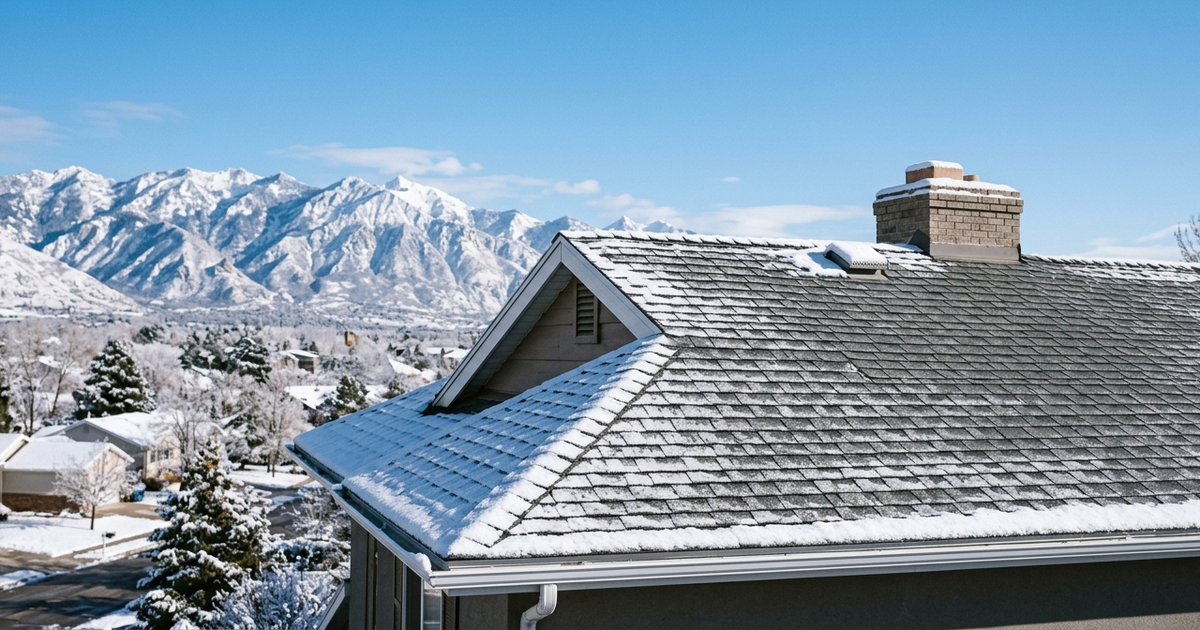
Two houses eight miles apart in Salt Lake County can be built to different structural roof requirements — not because they sit in different cities, but because of elevation. Utah's required snow load is set by a formula tied to how high your lot sits, not a single number for the whole state, and depending on where you are, it can matter as much to your project as the shingle you pick.
What Does a Roof Replacement Cost in Utah?
$12,900 to $17,500 for a typical single-story home before anything structural comes up.
Our cost model applies Utah's labor rate at 0.89× the national baseline against a $200 baseline permit fee, for a 2,000 sq ft home, moderate roof pitch, architectural shingle, and one layer of tear-off. Move any of those four — size, pitch, material, layers — and the range moves with it. The calculator below runs the same math against your actual address.
First time here? for a 2,400 sq ft home.
We can't load current pricing data right now — and we'd rather show you nothing than guess at a number this big. Please refresh in a moment.
Why Does Elevation Matter More Than City Limits Here?
Because Utah's building code doesn't vary block to block, but the physical load your roof structure has to be engineered for does.
Utah runs one statewide code cycle — the state currently enforces the 2021 suite of International Codes under Title 15A, the State Construction and Fire Codes Act, rather than leaving adoption to individual cities the way Texas does (Utah Code Title 15A, retrieved 2026-08-09). What isn't uniform is the ground snow load your roof has to be designed to hold, because that's a function of altitude, not jurisdiction.
Below 4,239 feet, the minimum ground snow load is set at 28 pounds per square foot. Above that elevation, there's no flat number — the required load is calculated per site using the state's official lookup tool, referenced directly in the Construction and Fire Codes Act (Greater Salt Lake Municipal Services District, retrieved 2026-08-09). A home in the Salt Lake Valley and one a short drive up toward the benches or into the canyons can carry meaningfully different structural requirements for the same roof.
This mostly affects new framing and structural work, not a straightforward like-for-like reroof. But if your replacement involves any deck or truss work, or you're in a higher-elevation area, it's worth confirming which load your permit is calculated against before pricing gets finalized — that number, not the city you live in, is what drives the engineering.
What License Does a Utah Roofer Need?
A real, state-issued specialty license — Utah is one of the states that regulates roofing directly, not through a patchwork of city ordinances.
Roofing contractors in Utah hold a specialty classification issued by the Division of Professional Licensing (DOPL), separate from the state's general contractor classifications. Getting one requires posting a surety bond of at least $15,000 and passing a PSI-administered trade exam covering roofing materials, load calculations, flashing standards, and the applicable building codes — the same International Building Code and International Residential Code framework the statewide code above is built on (Utah Contractor Authority, DOPL roofing licensing reference, retrieved 2026-08-29). That code-knowledge requirement is directly relevant given the snow-load engineering covered above — a licensed roofer has specifically been tested on load calculations, not just installation technique.
DOPL maintains a public license lookup, and it's worth checking a specific license number against it before signing — a bond and a tested knowledge of load calculations are exactly the credentials that matter most in a state where the structural math actually changes by elevation.
What to Confirm Before You Sign in a High-Snow Area
Ask which snow load figure the permit is filed under, especially if you're above 4,239 feet or unsure where your lot falls.
If your contractor pulls a permit without addressing this, that's worth a direct question rather than an assumption — the answer should be a specific number, not "standard code." It's also worth asking how ice-and-water shield is being handled at eaves and valleys; freeze-thaw cycling at elevation is a different problem than the flat-roof ice damming covered in our Ohio cost guide, but it points to the same kind of underlayment question. Ask to see the roofer's DOPL license number and check it directly against the state's public lookup, rather than trusting a number on a business card — the bond and exam requirement exist specifically so a homeowner has a real credential to verify, not just a claim to take on faith. Ask when the permit will actually be filed — Salt Lake City's own building services department targets 14 business days for first-review comments on a typical one- or two-family dwelling application, so a contractor promising a same-week permit approval on a standard job is setting an expectation the city itself doesn't commit to (Salt Lake City Building Services, retrieved 2026-08-29).
Our full roof replacement cost guide covers what a complete estimate should include and how to compare bids fairly across contractors. If you're comparing more than one quote, how to read a roof estimate walks through where padding actually hides.
Frequently Asked Questions
Does elevation really change what a Utah roof replacement costs?
Not directly through our cost model — labor and material pricing use the statewide 0.89× multiplier regardless of elevation. What elevation can change is whether structural or engineering review adds cost on top of a standard reroof, which is a separate line from the labor and material range above.
Is Utah's dry climate easier on a roof than a humid state?
Lower humidity generally means less algae and moss growth than a state like Georgia sees, but Utah's freeze-thaw cycling and UV exposure at altitude bring their own wear pattern. Neither cancels out the other; ask your contractor what's actually shortening roofs in your specific area.
Do I need an engineer for a simple reroof in a high-elevation area?
Usually not for a like-for-like shingle replacement with no structural changes. It becomes relevant if you're adding weight — switching to tile or heavy metal, for instance — or doing deck or truss repair alongside the reroof.
Will my homeowners insurance cover snow-load related roof damage in Utah?
Sometimes, for sudden damage like a structural failure under heavy snow — but ongoing deflection or wear from routine winter loading typically isn't a covered event. Our insurance claim guide covers how insurers generally draw that line.
Does Utah require roofers to be licensed?
Yes. Utah's Division of Professional Licensing issues a specialty roofing classification requiring at least a $15,000 surety bond and a passed trade exam covering roofing materials, load calculations, and applicable building codes. Verify a specific license through DOPL's public lookup before signing.
Cost data updated August 2026. Figures are published estimates and vary by roof size, pitch, material, and local permit fees.
What do you want to do next?
Three ways we can help from here.
Get the free contractor checklist → 7 questions to ask any roofer before you call. Know what to ask, and what a good answer sounds like.