Roof Replacement Cost in San Antonio: What You'll Actually Pay
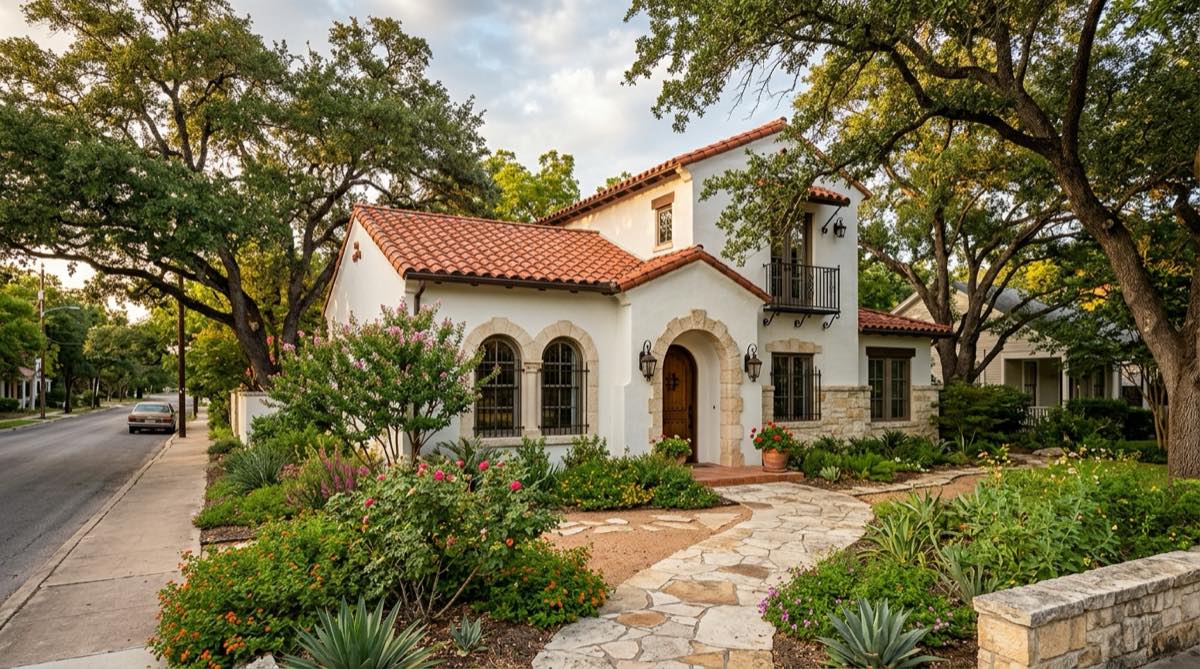
If your address sits inside one of San Antonio's locally designated historic districts — King William, Monte Vista, Tobin Hill, Government Hill, Dignowity Hill, and more than twenty others — a roof replacement isn't just a city permit. Changing your roof's material, profile, or visible form triggers a Certificate of Appropriateness review before the building permit will even issue, and that review step alone typically adds weeks to a straightforward, in-kind replacement (Historic Home Permits in King William, Explained, retrieved 2026-08-14). Most cost guides never mention this, because most cities don't have it.
What Does a Roof Replacement Cost in San Antonio?
$12,100 to $16,400 for a typical single-story home, the same range this site's Texas page, Houston page, and Austin page show — our model prices labor and permits at the state level, and San Antonio doesn't currently carry its own separate multiplier in the dataset.
That figure is built from a 2,000 sq ft home, moderate roof pitch, architectural shingle, and a single layer of tear-off, run against Texas's 0.82× labor rate and $175 baseline permit fee. A bigger house, a steeper pitch, a pricier material, or a second layer to remove all push the number up from there — plug in your own specs below.
First time here? for a 2,400 sq ft home.
We can't load current pricing data right now — and we'd rather show you nothing than guess at a number this big. Please refresh in a moment.
Why a Historic-District Address Changes Your Timeline, Not Just Your Budget
Because San Antonio has more locally protected historic neighborhoods than most cities its size, and each one puts a real design-review step between you and a permit.
Work inside the city limits generally goes through San Antonio's Development Services Department — but if your property sits within one of the city's locally designated historic districts, the Office of Historic Preservation reviews exterior work first. An in-kind re-roof that keeps the existing pitch, shape, and material can typically clear staff-level review without a full hearing, but changing materials, profile, or any visible roof form triggers a Certificate of Appropriateness through the Historic and Design Review Commission — and even a straightforward in-kind project still commonly runs 4 to 8 weeks total once that review is added to standard permit processing (Historic Home Permits in King William, Explained, retrieved 2026-08-14).
This is a genuinely different question than the code-jurisdiction issue our Texas and Houston pages cover — those are about which code edition applies where. This is about whether your specific roof qualifies for a fast administrative sign-off or a full commission hearing, and it only applies if your address is inside one of the protected districts. If you're not sure whether yours is, that's worth confirming with the city before you assume either timeline.
Why San Antonio's Hail Risk Isn't Just "Texas Is Hail Alley"
Because one specific storm here set the record for the entire state.
Our Texas page covers the general hail-alley-versus-Gulf-wind split that shapes roofing across the state. San Antonio's version of that risk has a concrete, documented high point: the April 12, 2016 hailstorm that struck San Antonio and Bexar County caused an estimated $1.4 billion in damage, making it the costliest hailstorm in Texas history — surpassing the previous record, a $1.1 billion hailstorm that hit Fort Worth on May 5, 1995 (Insurance Journal, "Texas Hail Losses Set Record in 2016", retrieved 2026-08-14). That single event is a real data point for what "hail risk" actually means here, not an abstract regional label.
What to Confirm Before You Sign in San Antonio
Ask directly whether your address falls inside a locally designated historic district, and if so, whether your project qualifies for staff-level review or will need a full Certificate of Appropriateness — a contractor who's worked in King William or Monte Vista before should be able to answer this without guessing.
Ask what UL 2218 impact-resistance class the quoted shingle carries, not just a general "hail-rated" label — with a storm history that includes the costliest hailstorm on record in the state, that spec is worth pricing rather than assuming. For the rest of what a complete quote should itemize, how to read a roof estimate covers it line by line, and how to get roofing quotes covers comparing bids from more than one contractor fairly.
Frequently Asked Questions
Do all San Antonio homes need historic preservation approval for a new roof?
No — only properties inside one of the city's locally designated historic districts or individually designated landmarks. Most San Antonio homes go through standard Development Services Department permitting with no additional design review.
How much longer does a historic-district roof replacement take?
Even a straightforward, in-kind replacement using the same materials and profile commonly runs 4 to 8 weeks total once Certificate of Appropriateness review is added to standard permit processing. Projects that change roofing material or visible form can take longer if they require a full Historic and Design Review Commission hearing.
Is San Antonio really that bad for hail?
The city holds the record for the single costliest hailstorm in Texas history — the April 12, 2016 storm caused an estimated $1.4 billion in damage. That doesn't mean every year sees a storm of that scale, but it's a real, documented data point for the region's hail exposure.
Will homeowners insurance cover hail damage in San Antonio?
Often, for sudden hail impact specifically, though coverage and deductible structure vary by policy — Texas policies commonly carry percentage-based wind/hail deductibles rather than a flat dollar amount. Our insurance claim guide covers how those deductibles typically work.
Cost data updated August 2026. Figures are published estimates and vary by roof size, pitch, material, and local permit fees.
What do you want to do next?
Three ways we can help from here.
Get the free contractor checklist → 7 questions to ask any roofer before you call. Know what to ask, and what a good answer sounds like.