Roof Leak Repair Cost: By Leak Type, and When to Replace Instead
What roof leak repair costs by leak type, the point where repair stops making sense, and how to tell a fair quote from a padded one.
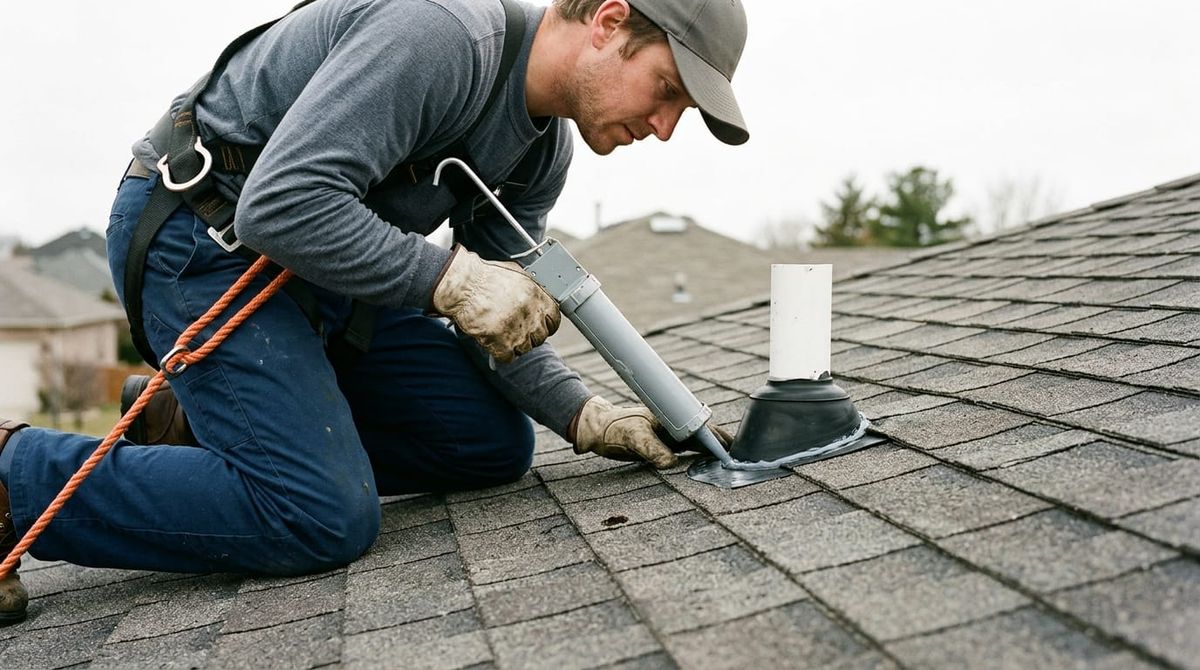
Most roof leak repairs land between $350 and $1,500, and the average sits near $800. What you pay depends on one thing more than any other: what's actually leaking. A failed pipe boot and a rotted valley are different jobs at different prices.
What Does Roof Leak Repair Cost by Type?
Here's the breakdown. Find your likely culprit and read the range.
The same numbers in text:
| What's leaking | Repair cost | How common |
|---|---|---|
| Pipe / vent boot | $150 – $400 | Most common leak |
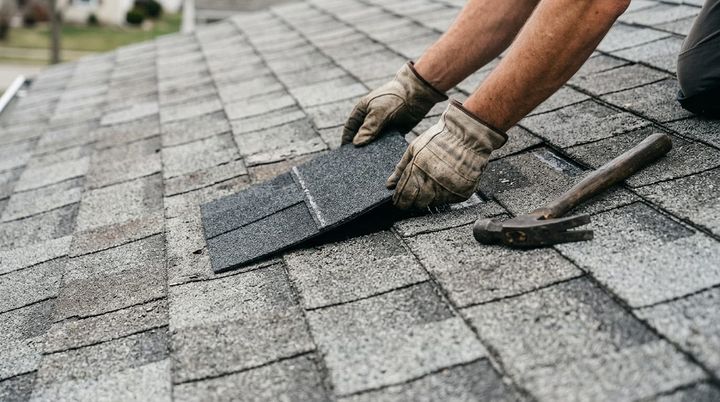
| Missing or damaged shingles | $150 – $450 | Very common |
| Flashing repair | $200 – $600 | Common |
| Valley repair | $500 – $1,200 | Less common |
| Chimney / skylight flashing | $500 – $1,500 | Common on older homes |
A quick definition, because quotes use the word constantly. Flashing is the thin metal installed wherever the roof meets something else — a chimney, a skylight, a wall, a vent. Most leaks happen at those junctions, not in the middle of a shingle field.
Why Does Waiting Cost So Much More?
Because the hole doesn't grow. What's underneath it gets wetter.
A leak caught in the first week typically stays in the $150–$500 range. The same leak ignored for three months often means replacing decking, and can multiply the bill by five to ten times (WeatherShield, retrieved 2026-07-29).
There's a second reason to move fast. If the leak came from a storm, most policies have filing deadlines measured in months. Wait too long and you're paying for something insurance might have covered.
When Does Repair Stop Making Sense?
When you're fixing the same roof in three different places, you're not repairing anymore. You're funding a replacement in installments.
| Situation | Repair | Replace |
|---|---|---|
| One leak, roof under 15 years | ✅ Repair | — |
| Two leaks, roof under 15 years | ✅ Repair, budget ahead | — |
| Leaks in three or more separate areas | — | ✅ Replace |
| Widespread granule loss plus a leak | — | ✅ Replace |
| Roof past 20 years with active leaks | — | ✅ Replace |
| Decking rot across multiple sections | — | ✅ Replace |
The rough rule: if repair costs approach 30% of a full replacement, replacing usually wins. Full replacement runs roughly $9,000–$18,000 for asphalt shingle, so once you're quoting $3,000+ in repairs on an aging roof, get a replacement bid alongside it and compare.
Age matters as much as the leak count. A single leak on a 6-year-old roof is a defect worth fixing. The same leak at year 22 is the roof telling you it's finished.
For example, take two identical failed pipe boots. On an 8-year-old roof, that's a $250 fix and you're done for another decade. On a 21-year-old roof with granule loss across the south slope, the same $250 fix buys maybe two years — and you'll likely spend it again elsewhere before then. Same repair, same price, completely different value.
Here's another way to look at it. If you've spent $1,200 on three separate repairs over two years, that's roughly 10% of a replacement already gone, with nothing to show for it and the roof no younger. At that point the next repair quote deserves a replacement bid beside it.
What Does a Fair Quote Look Like?
A fair quote names the cause, not just the fix.
Look for four things:
- The specific source. "Failed pipe boot on the north slope" beats "roof leak."
- Photos of the problem. If the roofer can't show it to you, be skeptical they found it.
- A deck-repair unit price. Rot is often invisible until they open it up. A good quote prices it per sheet up front instead of surprising you with a change order.
- What's excluded. Interior drywall and paint usually aren't the roofer's scope.
Two warning signs worth acting on. First, anyone who recommends full replacement from a single leak without showing you evidence of broader failure. Second, high-pressure timing — "today only" pricing on a repair is a sales tactic, not a quote.
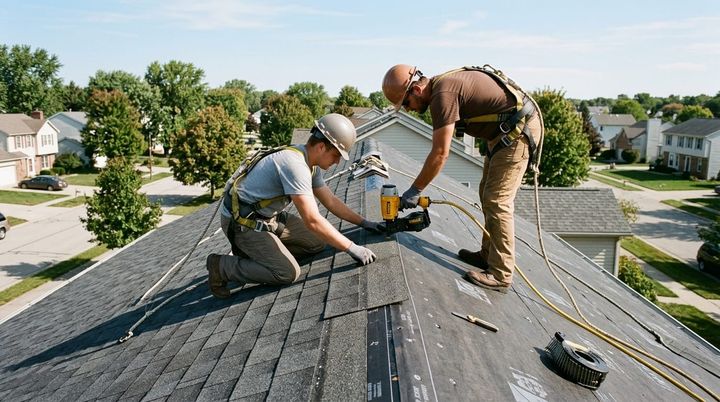
Also: don't go up there yourself to look. OSHA requires fall protection above six feet for exactly this work (OSHA, retrieved 2026-07-29). Roofers arrive with harnesses and anchors. Binoculars from the ground and a flashlight in the attic will tell you plenty.
How Do You Find the Leak Before the Roofer Arrives?
Check the attic first, and don't assume the leak is above the stain.
Water runs along rafters and decking before it drops. On a low-slope roof it can travel many feet. The ceiling stain marks where water exited, not where it got in.
- In the attic: look for daylight through the decking, dark staining on rafters, damp or matted insulation, and rusted nail heads.
- Around penetrations: vent pipes, chimneys, and skylights are the usual suspects. Check those first.
- After a storm: check even without a visible drip. Hail can bruise a shingle mat without cracking it, and material choice makes a big difference to how a roof survives (FEMA, retrieved 2026-07-29).
Photograph whatever you find, with dates. That documentation helps the roofer locate the source faster and supports an insurance claim if one follows.
Regular inspection catches most of this before it leaks at all. The National Roofing Contractors Association recommends checking at least twice a year plus after major storms (NRCA, retrieved 2026-07-29).
Cost data updated July 2026. Figures are published US ranges and vary by region, roof complexity, and access.
What do you want to do next?
Three ways we can help from here.
Get the free contractor checklist →7 questions to ask any roofer before you call. Know what to ask, and what a good answer sounds like.Will insurance pay?What claims cover — and what they don't.Find financingReal cost over the term, not the monthly.
Frequently Asked Questions
Can I patch a roof leak myself?
Temporarily, from inside. You can contain water and protect belongings. Climbing onto the roof to patch it is a different matter — fall protection requirements exist because roof falls cause serious injuries, and a DIY patch over the wrong spot can hide the real source.
How long does a roof leak repair take?
Most single-source repairs take a few hours. Add time if decking needs replacing or if the roofer has to trace the source first. Weather can push the schedule.
Will insurance cover a roof leak?
Sudden storm damage is usually covered. Gradual failure from age or neglect usually isn't. The distinction often comes down to documentation, which is why photos and inspection records matter.
The stain is small — can I just wait and watch it?
Waiting is the single most expensive choice available. A small stain means water is already tracking through your roof assembly. The repair only gets bigger, and a storm-related claim window may close while you watch.
Does a leak mean I need a whole new roof?
Usually not. One leak on a roof under 15 years old is normally a targeted repair. Multiple leaks in different areas, or any leak on a roof past 20 years, is when replacement enters the conversation.
Comments ()