Gutter Material Comparison: Aluminum vs. Steel vs. Copper vs. Vinyl
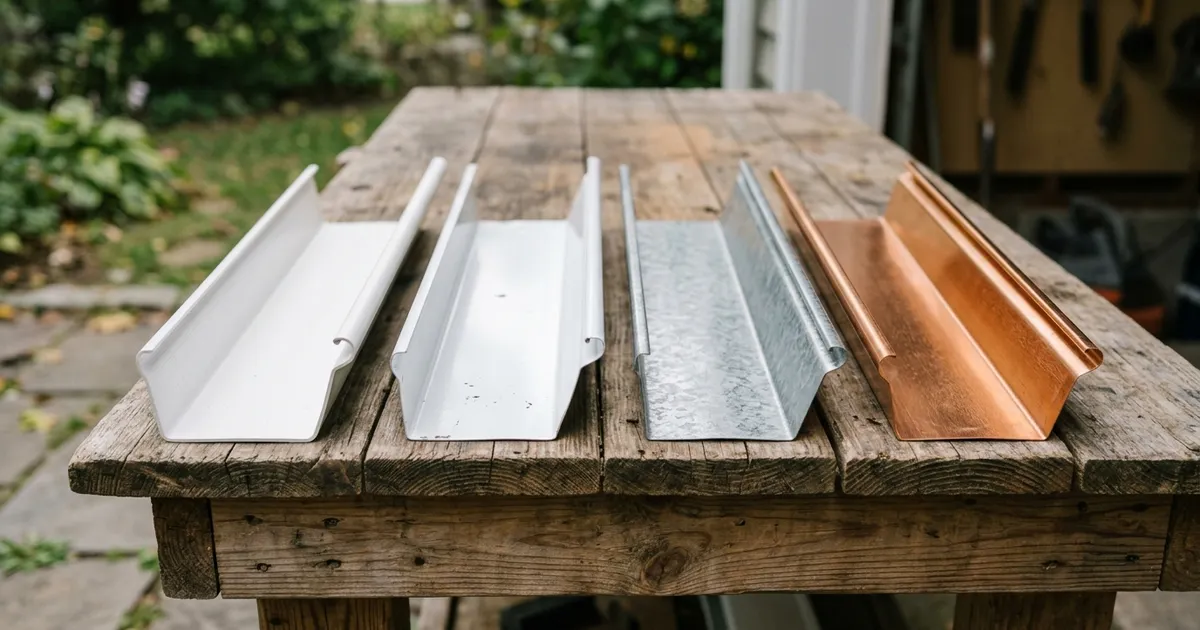
This page answers a narrower question than it might look like. If you want per-foot pricing, our gutter cost guide has the real numbers. If you want to know how many years a material actually lasts, our gutter lifespan guide covers that in depth. This page is for the question that comes before either of those: given your specific house, climate, and whether you're doing this yourself or hiring it out, which material is actually the right fit — not just which one is cheapest or which one lasts longest in the abstract.
The Four Materials, Compared at a Glance
Each one wins on a different axis, and none of them wins on all of them.
| Vinyl | Aluminum | Steel | Copper | |
|---|---|---|---|---|
| Relative weight | Lightest | Light | Heavier | Heaviest |
| DIY feasibility | Realistic | Uncommon but possible | Rare — professional | Professional/specialist only |
| Corrosion behavior | Doesn't corrode, but UV-brittles | Doesn't rust; can dent | Zinc coating wears, then rusts | Patina protects rather than corrodes |
| Finish | Molded-in color, limited palette | Baked-on paint, wide color range | Painted or coated finish | Unpainted — patina is the finish |
| Best-fit climate | Mild, dry | Most climates in standard use | Heavy snow, high wind | Any — cost is the limiting factor, not climate |
Weight Is the Difference You Don't See Until Installation Day
On paper, all four materials just look like gutters. On the roof, weight decides how the installation actually has to be done.
Aluminum's biggest practical advantage has nothing to do with corrosion — it's that the material is light enough to hang on standard hardware without much engineering thought, which is a real part of why it became the default choice for most American homes. Steel, weighing meaningfully more per linear foot, needs hanger spacing tightened up to carry the same span without sagging, and copper — the heaviest common option — needs that same consideration plus, often, a more experienced installer who works with heavy-gauge metal regularly. None of this shows up on a spec sheet the way a price-per-foot number does, but it's a real part of why a copper or heavy-gauge steel quote includes more labor than an aluminum one for the identical linear footage.
Vinyl sits at the other extreme — lighter even than aluminum — which is exactly why it's the one material realistically suited to sectional, hardware-store DIY installation. It's also why vinyl is the material most prone to visible sagging if hangers are skipped or spaced too wide: there's less structural stiffness in the material itself to compensate for a mediocre install.
Which Material Actually Fits a DIY Project?
Realistically, one of them — and it's not close.
Vinyl gutters come as pre-cut sectional pieces that snap together with basic hand tools, which is the whole reason a confident DIYer can reasonably take on a vinyl gutter replacement over a weekend. Aluminum sectional systems exist and are occasionally DIY-installed, but most aluminum gutters on real houses are seamless — formed on-site from a coil of raw material by a truck- or trailer-mounted machine that feeds the coil through a series of rollers to bend it into the finished gutter profile and cuts it to the exact length needed (KWM Gutterman, retrieved 2026-08-11) — which isn't a homeowner project by design, not just by difficulty. Steel and copper are essentially never realistic DIY materials: both typically go up as seamless systems using that same specialized forming equipment, plus meaningfully more physical effort to handle and fasten safely given the added weight.
If the appeal of a DIY gutter project is mainly cost, it's worth running that math against the actual per-foot pricing by material rather than assuming DIY vinyl is automatically the budget winner — the labor savings on a DIY job are real, but they're a percentage of vinyl's already-low material cost, which is a smaller absolute dollar figure than the same percentage saved on a pricier material you can't safely DIY anyway.
Why You Can't Mix Metals Casually
This is a comparison factor most gutter-shopping guides skip, and it changes a real decision: what your gutters connect to, not just what they're made of.
Galvanic corrosion happens when two different metals stay in electrical contact in the presence of moisture — one corrodes faster than it would alone, at the expense of protecting the other. Copper ranks among the worst offenders in this pairing: a severe corrosive effect on steel, aluminum, and zinc specifically, per the metal construction trade's own technical guidance on the subject (Metal Construction Association, retrieved 2026-08-11). In practice, that means copper roofing, copper flashing, or copper fasteners draining onto or touching a different metal's gutter system will measurably speed up that gutter's corrosion — not just sit next to it neutrally. The reverse combination — a copper gutter system fastened with galvanized or zinc-coated hardware — creates the same problem in the other direction, corroding the less noble fastener metal instead.
The practical rule when choosing a gutter material isn't just "what material do I want" — it's "what does this material need to touch or drain from." Aluminum gutters under a copper roof, or copper gutters hung with galvanized hardware, are both combinations worth flagging to your contractor before installation rather than after the corrosion shows up. Our gutter lifespan guide covers the specific mechanism and the surface-area ratio that limits the risk in more depth.
Which Material Fits Which Climate?
The comparison changes meaningfully once you stop treating "best gutter material" as a single national answer — coastal salt exposure, heavy snow load, and intense UV each punish a different material disproportionately, for different physical reasons. Our gutter lifespan guide walks through the specific mechanism behind each of those — why salt is uniquely hard on galvanized steel's zinc coating, why gauge thickness matters more than material choice in heavy snow, why vinyl is the one material UV genuinely defeats. The short version for a fast decision: mild, moderate climates are the one condition where all four materials perform close to their best-case numbers, which is exactly why cost, weight, and looks end up carrying more of the decision there than climate survivability does.
Which Material Is Quietest in the Rain?
Vinyl, noticeably — and it's not a subjective preference, it's how the materials physically respond to impact.
Metal gutters amplify sound because they're hard and resonant; without any dampening, rain and drip noise travels and echoes through the metal in a way a softer, less resonant material doesn't (A.I Gutter & Roofing, retrieved 2026-08-11). That effect is real on aluminum, more pronounced on the heavier-gauge and stiffer metals like steel and copper, and largely absent on vinyl, which doesn't resonate the same way under impact. If a metal gutter's rain noise is genuinely bothersome from an upstairs bedroom under the roofline, foam downspout inserts and liner wrap are the standard fix — they cushion the impact rather than requiring you to switch materials — but it's worth knowing about before installation on a bedroom-adjacent roofline, not after the first loud storm.
Which Material Is the Better Environmental Choice?
Metal, by a clear margin, though the details differ material to material.
Aluminum is essentially infinitely recyclable — scrap aluminum from an old gutter is chemically identical to virgin aluminum and can be reprocessed into anything from new gutters to car parts without any loss of quality (Okon Recycling, retrieved 2026-08-11). Copper shares that same indefinite-recyclability property, and steel is recyclable as well, though it fetches a lower price per pound than the non-ferrous metals. Vinyl is the outlier: plastic gutters can sit in a landfill for centuries after disposal, and while a handful of specialty recyclers accept vinyl gutter material, it's far from universally collected the way scrap metal is. None of this changes which material is right for your house structurally, but it's a real, often-overlooked difference between the four if end-of-life impact factors into the decision at all.
Can You Repair Just One Section, or Does the Whole Run Come Out?
"Seamless" describes the length between corners, not the whole system — which matters more for repair than most homeowners assume going in.
A small hole or a leaky corner joint is a universal repair across every material here: clean the surface, patch the hole with a compatible metal patch or sealant, or reseal the joint, and the gutter is functional again regardless of whether it's vinyl, aluminum, steel, or copper. Where the materials genuinely diverge is on damage that's past patching. A seamless run with a bad dent, a split, or advancing rust doesn't require tearing out gutters on the whole side of the house — a professional can cut out the damaged length and splice in a new custom-formed section — but it does require that professional and that equipment, the same as a full seamless install. Sectional vinyl, by contrast, was designed around exactly this scenario: a damaged length simply unsnaps from its neighbors and a new piece snaps in, which is squarely within DIY reach.
One material-specific caution worth knowing before you patch rather than replace: once galvanized steel has actually started rusting through in a section, that section is a better candidate for replacement than repair — the sacrificial zinc coating that was protecting it is already gone at that spot, and a patch over active rust is treating a symptom, not stopping the underlying corrosion (This Old House, retrieved 2026-08-11).
What About Color and Curb Appeal?
The four materials don't just look different installed — they age differently, which matters more than the day-one color.
Vinyl comes with color molded into the material itself, which means no repainting, but also a narrower color range than a painted metal and a tendency to fade with UV exposure over the years. Aluminum and steel are typically finished with a baked-on paint system offering a wide color selection, matched to trim or left neutral, and can generally be repainted later if the finish ages unevenly. Copper is the outlier by design: it's never painted, and its whole aesthetic case is built on the patina process — the shift from bright copper to brown to green verdigris over years to decades is the finish, not a defect to prevent. Choosing copper for looks means choosing to want that transformation, not choosing a static color the way you would with the other three materials.
So Which Material Should You Actually Pick?
There isn't a universal right answer, but the decision narrows fast once you know which factor matters most for your specific house.
If a DIY install is the priority, vinyl is the only material that's genuinely realistic — everything else on this page requires equipment and experience most homeowners don't have and shouldn't try to improvise. If you're hiring the work out and want the safest, most tested default, standard aluminum is the reason it ended up on the majority of American homes: light, non-rusting, wide color range, and reasonably priced. If your climate is the deciding factor — heavy coastal salt, sustained snow load, or intense year-round sun — the climate section above (and the mechanism behind each, in our gutter lifespan guide) points toward galvalume or stainless near the coast, heavier-gauge metal in snow country, and away from vinyl anywhere UV-intense. And if you're choosing for a long ownership horizon or the look itself, copper is the only material on this page built for both — the tradeoff is a real cost premium and a professional installer who works with heavy-gauge metal regularly, not a weekend project.
Whichever material wins on your priority list, the same rule from our cost guide still applies before you sign anything: get the quote broken out by material and linear foot, not a single lump number, so you know exactly which of these four products you're actually paying for.
Frequently Asked Questions
Which gutter material is easiest to install myself?
Vinyl, by a wide margin. It comes as pre-cut sectional pieces designed for hand-tool assembly, while aluminum, steel, and copper are typically installed as seamless systems formed on-site with equipment that isn't practical to rent or operate as a one-time DIY job.
Do heavier gutter materials need more support?
Yes. Steel and copper weigh meaningfully more per linear foot than aluminum or vinyl, which means hangers need to be spaced closer together to carry the same span without sagging — part of why heavier materials typically cost more to install even before the material price difference.
Can I put aluminum gutters on a house with a copper roof?
You can, but it's worth flagging to your contractor first. Runoff carrying trace copper accelerates corrosion in aluminum specifically, so an aluminum gutter system under copper roofing or flashing will likely corrode faster than the same aluminum system under an asphalt or other non-copper roof.
Is copper worth it just for the look, or only for the lifespan?
Both are real reasons, and they compound — copper's patina is widely considered a genuine aesthetic upgrade on the right house, and that same material also happens to outlast every other option by decades. If the look doesn't appeal to you, the lifespan alone is a harder case to make against a well-chosen galvalume or heavy-gauge aluminum system at a fraction of the cost.
Are metal gutters really louder than vinyl in the rain?
Yes, and it's a physical property of the materials, not a myth — metal's hard, resonant surface amplifies the sound of rain and drip impact, while vinyl doesn't resonate the same way. It's a real consideration for a bedroom directly under a roofline, though foam inserts and liner wrap reduce the effect on metal gutters without requiring a material change.
Which gutter material is the most environmentally friendly?
Aluminum and copper are both essentially infinitely recyclable without quality loss, and steel is recyclable too, if at a lower scrap value per pound. Vinyl is the outlier — it can persist in a landfill for centuries, and recycling acceptance for it is far less consistent than for scrap metal.
What do you want to do next?
Three ways we can help from here.
Get the free contractor checklist → 7 questions to ask any roofer before you call. Know what to ask, and what a good answer sounds like.