Roof Replacement Cost in Minneapolis: What You'll Actually Pay
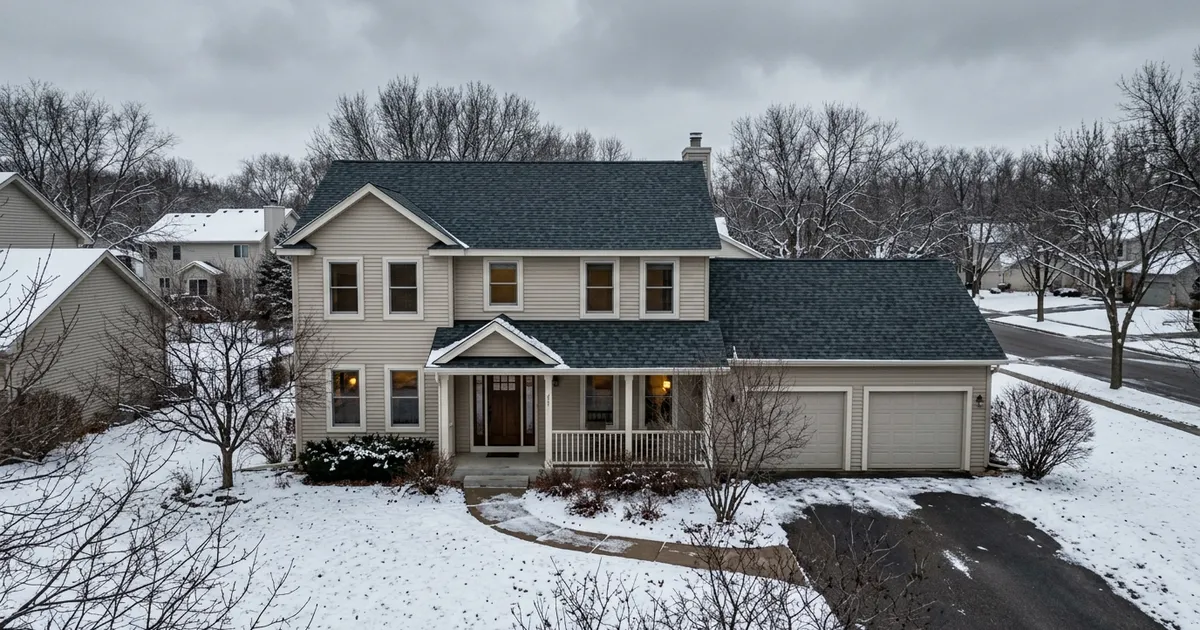
Minneapolis roofs are engineered to a specific, named number: 50 pounds per square foot of ground snow load, set by state rule for Hennepin County — 10 psf lower than the 60 psf required across 29 named counties in northern Minnesota (Minnesota Office of the Revisor of Statutes, Rule 1303.1700, retrieved 2026-08-14). That's not a suggestion or a regional average. It's a structural design requirement your roof is legally built to withstand, and it's only one of three real climate stresses stacking on a Minneapolis roof at once.
What Does a Roof Replacement Cost in Minneapolis?
$14,700 to $20,100 for a typical single-story home, before anything unexpected turns up once the old roofing comes off.
That range comes from a 1.06× Minnesota labor multiplier and a $235 baseline permit fee, run against a 2,000 sq ft home with moderate pitch and a single layer of tear-off. The calculator below prices your specific house.
First time here? for a 2,400 sq ft home.
We can't load current pricing data right now — and we'd rather show you nothing than guess at a number this big. Please refresh in a moment.
Why Minneapolis Roofs Face Three Real Stresses at Once
Because snow load, hail, and cold aren't separate weather stories here — they're three different engineering problems stacking on the same roof.
Snow load is a legal design number, not weather commentary. State building rule sets ground snow load at 50 pounds per square foot for Hennepin County specifically, rising to 60 psf in 29 named counties across northern Minnesota (Minnesota Rule 1303.1700, retrieved 2026-08-14). That's meaningfully different from a place like Utah, where snow load scales continuously with a site's elevation — Minnesota sets a flat number by county, and a Minneapolis roof has to be built to carry it regardless of the specific winter.
Hail here isn't rare, and it isn't small. Minnesota sees hail somewhere in the state on more than 40 days in a typical year, with 1-inch-or-larger hail on 30 to 35 of those days, and 2-inch-or-larger hail on 7 to 8 days a year on average (Minnesota DNR, retrieved 2026-08-14). Minnesota consistently ranks among the top handful of states for hail-related insurance losses, in the same tier as Colorado and Texas. Our Colorado guide covers the UL 2218 impact-resistance rating system in depth if you want to know what a Class 4 shingle actually guarantees against hail this frequent — the rating system is the same one worth asking about here.
Cold adds a third, separate mechanism. Minnesota's winters put roofing material through repeated freeze-thaw stress on top of the snow and hail loads above, and state climate researchers have been tracking how that cycle count is actually shifting as winters warm (Minnesota DNR climatology, retrieved 2026-08-14). None of the three stresses — structural snow load, hail impact, thermal cycling — cancels the others out. They're each pricing something different into what a Minneapolis roof needs to survive.
Does Minnesota Require a Roofing License?
Yes — Minnesota is one of the minority of states that actually licenses roofing directly, a real contrast with several other states on this site that leave it entirely to local jurisdictions or skip regulation altogether.
Under Minnesota Statute §326B.802, anyone contracting with a homeowner to install, repair, or replace roof coverings on residential property must hold a state license through the Department of Labor and Industry — either a dedicated Residential Roofer license, or a broader Residential Building Contractor (RBC) or Residential Remodeler license that already authorizes roofing work as part of its scope (Contractor License Requirements, citing Minn. Stat. §326B.802, retrieved 2026-08-29). A company that only does roofing typically holds the dedicated Residential Roofer credential; one that does broader remodeling or general residential construction can cover roofing under its RBC license instead, without needing both.
Practically: ask which of the three licenses your contractor holds and check the number against DLI's public license lookup — a contractor who can't produce one at all isn't legally allowed to be quoting the job.
What to Confirm Before You Sign in Minneapolis
Ask directly whether the quoted shingle carries a specific UL 2218 impact-resistance class, not just a general "storm-rated" label — with hail this frequent, the difference between an untested product and a documented Class 4 rating is worth pricing, not assuming.
Confirm the roof structure itself, especially on an older home, has been checked against the current 50 psf snow load requirement rather than whatever standard applied when it was originally built — codes get revised, and an older roof's original engineering may predate the current rule. Ask which of the three state licenses the contractor holds — Residential Roofer, Residential Building Contractor, or Residential Remodeler — and verify the number directly through DLI's lookup rather than taking a truck decal at face value. For what a complete quote should itemize beyond these Minneapolis-specific questions, how to read a roof estimate covers it line by line, and how to get roofing quotes covers comparing bids from more than one contractor fairly.
Frequently Asked Questions
How much snow load does a Minneapolis roof actually need to support?
50 pounds per square foot of ground snow load, set by Minnesota Rule 1303.1700 for Hennepin County specifically. That's a legal structural design minimum, not a rough seasonal estimate, and it's 10 psf lower than the 60 psf required in 29 named northern Minnesota counties.
Is Minneapolis really that bad for hail?
Yes, more than most homeowners expect from a northern city. Minnesota sees hail somewhere in the state on 40-plus days in a typical year, and consistently ranks among the top states nationally for hail-related insurance losses — a similar tier to Colorado and Texas.
Should I get impact-resistant shingles in Minneapolis?
Worth pricing given how frequently the state sees significant hail. Ask for the specific UL 2218 class rather than a generic "storm-rated" label — our Colorado guide covers what that rating actually tests and guarantees.
Will homeowners insurance cover hail damage in Minneapolis?
Often, for sudden hail impact specifically, though coverage and deductible structure vary by policy. Our insurance claim guide covers what insurers typically look for when documenting a hail claim.
Does Minnesota require roofers to be licensed?
Yes. Under Minn. Stat. section 326B.802, roofing contractors need a state license through the Department of Labor and Industry — either a dedicated Residential Roofer license, or a Residential Building Contractor or Remodeler license that already covers roofing. Check the license number against DLI's public lookup.
Cost data updated August 2026. Figures are published estimates and vary by roof size, pitch, material, and local permit fees.
What do you want to do next?
Three ways we can help from here.
Get the free contractor checklist → 7 questions to ask any roofer before you call. Know what to ask, and what a good answer sounds like.