Roof Replacement Cost in Chicago: What You'll Actually Pay
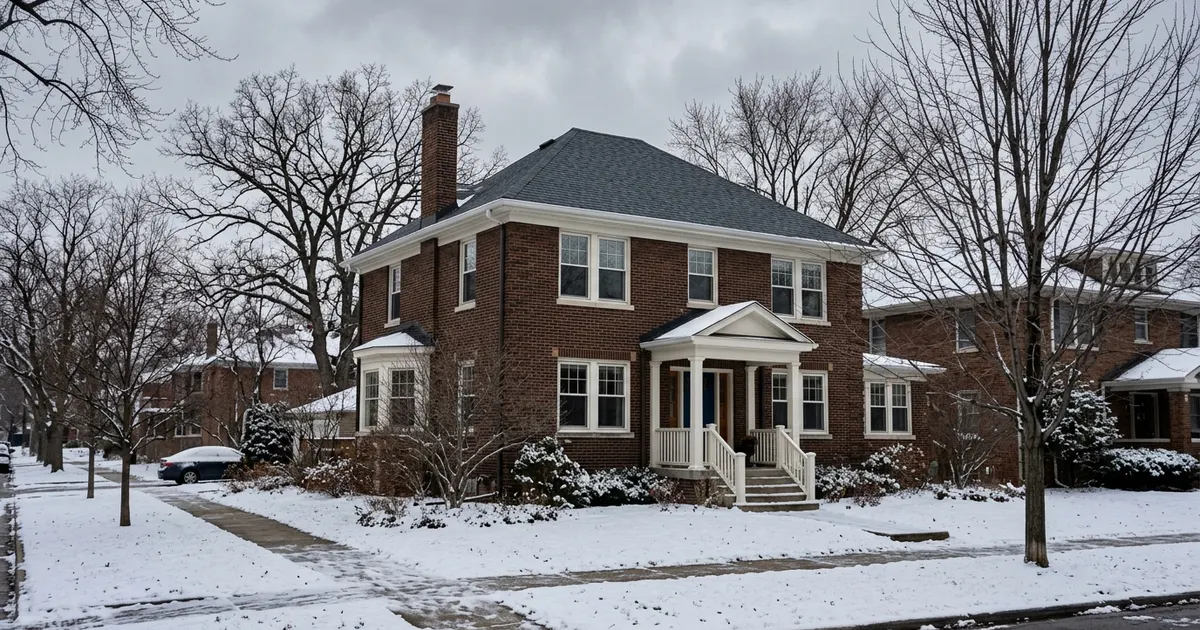
Most of Lake Michigan's snowbelt sits on the lake's eastern shore, in Michigan — not around Chicago. Lake-effect snow forms when wind picks up moisture crossing open water and dumps it on whatever shoreline it hits next, and Great Lakes winds run westerly far more often than not, which is why West Michigan gets buried while Chicago, on the western shore, mostly gets spared (National Weather Service, retrieved 2026-08-14). "Mostly" is the word worth sitting with — it isn't "never."
What Does a Roof Replacement Cost in Chicago?
$15,100 to $20,800 for a typical single-story home, before anything unexpected turns up once the old roofing comes off.
That range comes from a 1.10× Illinois labor multiplier and a $240 baseline permit fee, run against a 2,000 sq ft home with moderate pitch and a single layer of tear-off. Size, pitch, material, and layer count all move the number from there — the calculator below prices your specific house.
First time here? for a 2,400 sq ft home.
We can't load current pricing data right now — and we'd rather show you nothing than guess at a number this big. Please refresh in a moment.
Why Chicago's Snow Risk Is More Specific Than "Cold Winters"
Because the mechanism behind it depends on which way the wind is blowing, not just the season.
Lake-effect snow forms when cold air crosses open, relatively warmer lake water, picks up moisture, and dumps it as snow on the first shoreline it reaches. Around Lake Michigan, that means westerly winds — the prevailing pattern — carry moisture toward the Michigan side, which is why that shore is a genuine snowbelt and Chicago, sitting on the opposite shore, generally isn't. But when the wind turns and blows from the north or northeast instead, the pattern reverses, and Chicago's own shoreline can pick up a real lake-enhanced snow event rather than the typical Midwest system passing through. It's a real, if less frequent, part of the region's winter — and it's a genuinely different mechanism than the freeze-thaw cycling our Ohio guide covers, which is about heat escaping an attic and melting snow unevenly, not about which direction a storm approaches from.
That distinction matters for a roof less than the underlying reality it points to: any Chicago winter brings the temperature swings that drive ice dams, on top of whatever a given storm's wind direction adds. Our roof leak repair guide covers what repairing ice-dam water damage actually costs once it's happened, separate from what it costs to remove the ice itself.
What Makes Chicago's Permitting Process Its Own Local Factor
Slower and more procedural than most of the metros this site covers — worth budgeting for in timeline, not just dollars.
Standard permit review in Chicago commonly runs 80 or more days, though a self-certification track exists for eligible projects that can compress that to roughly 10 business days if your contractor and plans qualify for it (Illinois Policy Institute, retrieved 2026-08-14). On top of the standard review timeline, Chicago has a customary practice known as aldermanic prerogative, where the alderman for a given ward has historically held informal veto influence over projects in that ward — a layer of local politics that doesn't exist in most cities' permitting processes and that a contractor with real local experience will know how to navigate. Ask directly whether your contractor's proposed timeline assumes standard review or the faster self-certification track, since the gap between the two is measured in months, not days.
What to Confirm Before You Sign in Chicago
Ask which permit track your project is filed under — standard review or self-certification — and get the expected timeline in writing rather than an optimistic verbal estimate.
Ask whether ice-and-water shield is included at the eaves and valleys, and how far up the roof it runs; Chicago's winters make this worth confirming rather than assuming, the same question our Ohio guide covers in more depth on the ice-dam mechanism itself. And if your contractor has less experience working in the city specifically, ask about their track record navigating Chicago's permit process — a crew unfamiliar with the local bureaucracy can turn an 80-day wait into something longer.
For what a complete quote should itemize beyond these Chicago-specific questions, how to read a roof estimate covers it line by line, and how to get roofing quotes covers comparing bids from more than one contractor fairly.
Frequently Asked Questions
Does Chicago actually get lake-effect snow?
Yes, but less often and less predictably than Michigan's west coast. It requires wind from the north or northeast to reach Chicago's shore, which is the less common wind direction for the region — most of the time, prevailing westerly winds carry lake-effect snow toward Michigan instead.
How long does it take to get a roofing permit in Chicago?
Standard review commonly takes 80 days or more. A self-certification program can shorten that to around 10 business days for projects and contractors that qualify — ask your contractor which track applies to your job before you assume either timeline.
Is Chicago's roof replacement cost higher than the national average?
Yes — Illinois prices at roughly 1.10× the national labor baseline in our model, above the roughly even-to-discounted rate most other states on this site carry.
Will homeowners insurance cover ice dam damage in Chicago?
Sometimes, for the sudden water intrusion specifically — insurers often expect reasonable prevention, and damage from a known, unaddressed ice dam problem can be treated differently. Our insurance claim guide has the fuller breakdown of what insurers generally do and don't cover.
Cost data updated August 2026. Figures are published estimates and vary by roof size, pitch, material, and local permit fees.
What do you want to do next?
Three ways we can help from here.
Get the free contractor checklist → 7 questions to ask any roofer before you call. Know what to ask, and what a good answer sounds like.